

Stephan Universal Food Processing Machines for Dairy, Convenience & Confectionery
Stephan is a brand of the ProXES Group with over 60 years of experience in developing and manufacturing high-performance process machinery for the food industry. Specializing in universal machines and multifunctional batch systems, Stephan equipment serves manufacturers in dairy, convenience food, and confectionery production worldwide. The product portfolio covers the full spectrum — from laboratory-scale units to industrial lines processing up to 6,000 kg per hour. Stephan machines combine multiple functions — heating, mixing, cutting, emulsifying, and vacuum processing — in a single compact unit, reducing line complexity and increasing production efficiency.
What Is Stephan food processing machines?
Stephan universal food processing machines are multifunctional batch and continuous processing systems designed to perform several critical food manufacturing operations in a single unit. These machines integrate heating (direct and indirect), vacuum processing, cutting, mixing, emulsifying, and dispersing into one controlled environment. Originally developed for processed cheese production, Stephan technology has since been adapted to serve a wide range of food categories, including convenience products, sauces, baby food, and confectionery. As part of the ProXES Group, Stephan machines are engineered to meet strict food safety and hygiene standards, including aseptic and UHT processing requirements.
How It Works: Key Process Steps
Industrial Stephan food processing machines follows a defined sequence. Each step is critical to achieving a stable, high-quality result:
- Raw Material Feeding: Ingredients are loaded into the processing vessel, which can range from a lab-scale unit to an industrial system with capacities up to 6,000 kg/h, depending on the machine model selected.
- Pre-Heating: The product is pre-heated using direct steam injection or indirect double-jacket heating to bring it to the optimal temperature for subsequent processing steps.
- Cutting and Size Reduction: High-speed cutting blades (as in the Microcut or Combicut systems) reduce particle size, break down solid ingredients, and create a uniform, homogeneous mass.
- Mixing and Emulsifying: Rotating mixing and emulsifying tools combine fat, protein, and water phases into a stable emulsion — a critical step for products like processed cheese, mayonnaise, ketchup, and dressings.
- Thermal Processing: The product is heated to the required temperature — up to 125°C for standard batch processing or up to 145°C in UHT systems — to achieve pasteurization or sterilization as required.
- Vacuum Processing: Optional vacuum application removes entrapped air bubbles, improves product texture, extends shelf life, and preserves color and flavor — especially important for sauces, baby food, and dairy products.
- Cooling and Discharge: After processing, the product is cooled via indirect cooling or double-jacket systems, then discharged for downstream filling, portioning, or packaging steps.
Key Challenges
Common technical and regulatory challenges include:
- Achieving consistent texture and viscosity across batch-to-batch and shift-to-shift production
- Integrating multiple process steps (heating, cutting, emulsifying, vacuum) in a single hygienic unit
- Meeting food safety standards for aseptic and UHT applications with validated process parameters
- Scaling processes seamlessly from lab development to full industrial production without quality loss
- Processing high-viscosity products such as processed cheese, marzipan, or surimi without equipment degradation
- Maintaining CIP (Clean-in-Place) compliance and fast changeover in multi-product production environments
- Controlling temperature-sensitive products like baby food or dairy ingredients with precision and reproducibility
- Adapting flexible production lines to a diverse product portfolio with minimal setup and downtime
Product Portfolio
The following products are available for different industries, scales, and requirements:
-
Combitherm Flexible and multifunctional batch processing

Capacities up to 4,800 l/hour*
- Functions:
- mixing
- emulsifying
- dispersing
- direct/indirect heating
- frequency controlled knifes
- vacuum processing
- Main applications:
- mayonnaise
- ketchup
- dressings
- dips
- baby food
- sauces
*Application: low viscous products

Download our latest brochure to find out more about our products.
-
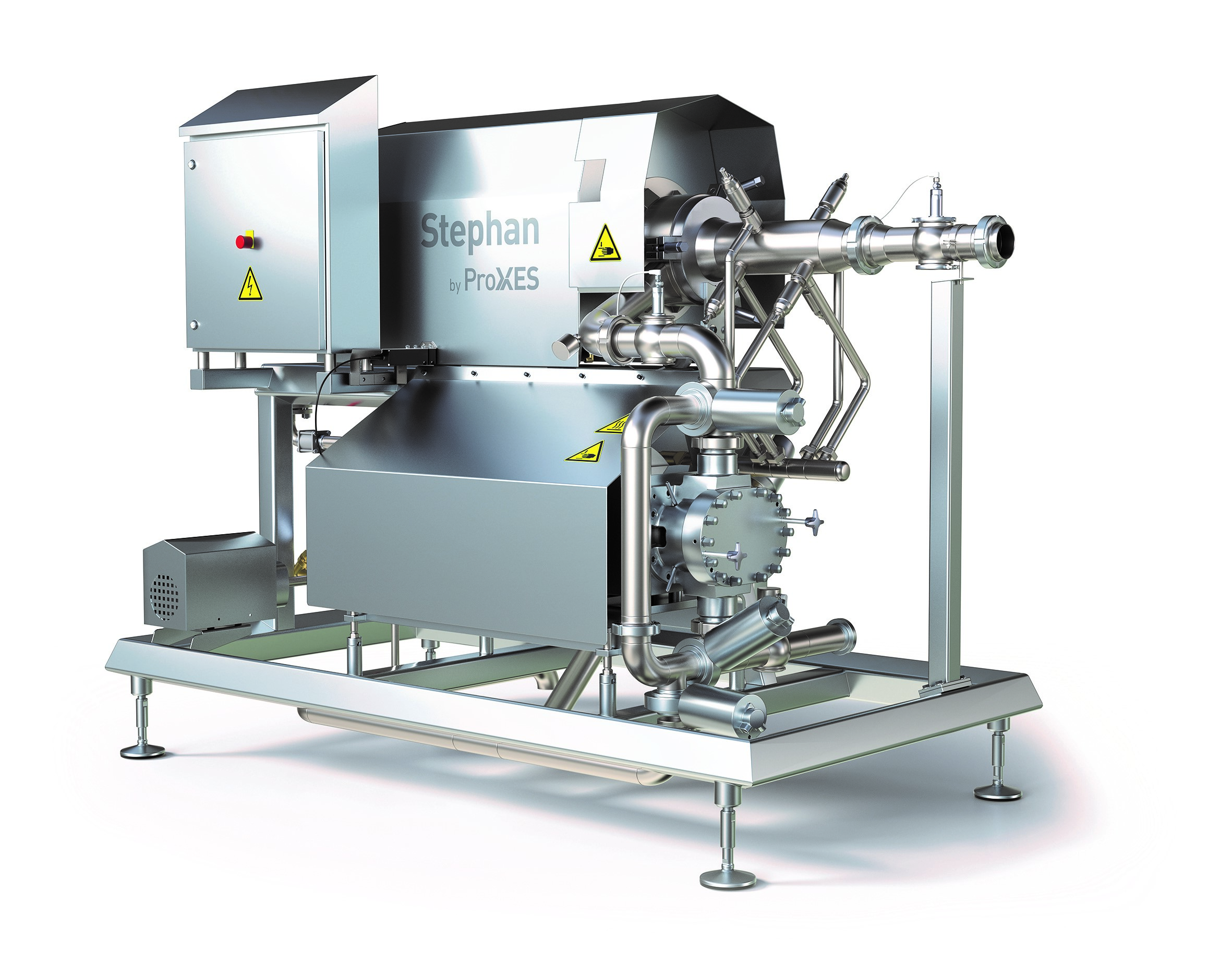
Continuous CookerInline high-shear unit
- Capacities up to 6.000 l/hour*
- Functions:
- cutting
- dispersing
- emulsifying
- homogenizing
- Main applications:
- processed cheese
- vegetable purees
- ketchup and other sauces
*Application: spreadable processed cheese for jars or triangle portions

Download our latest brochure to find out more about our products.
-
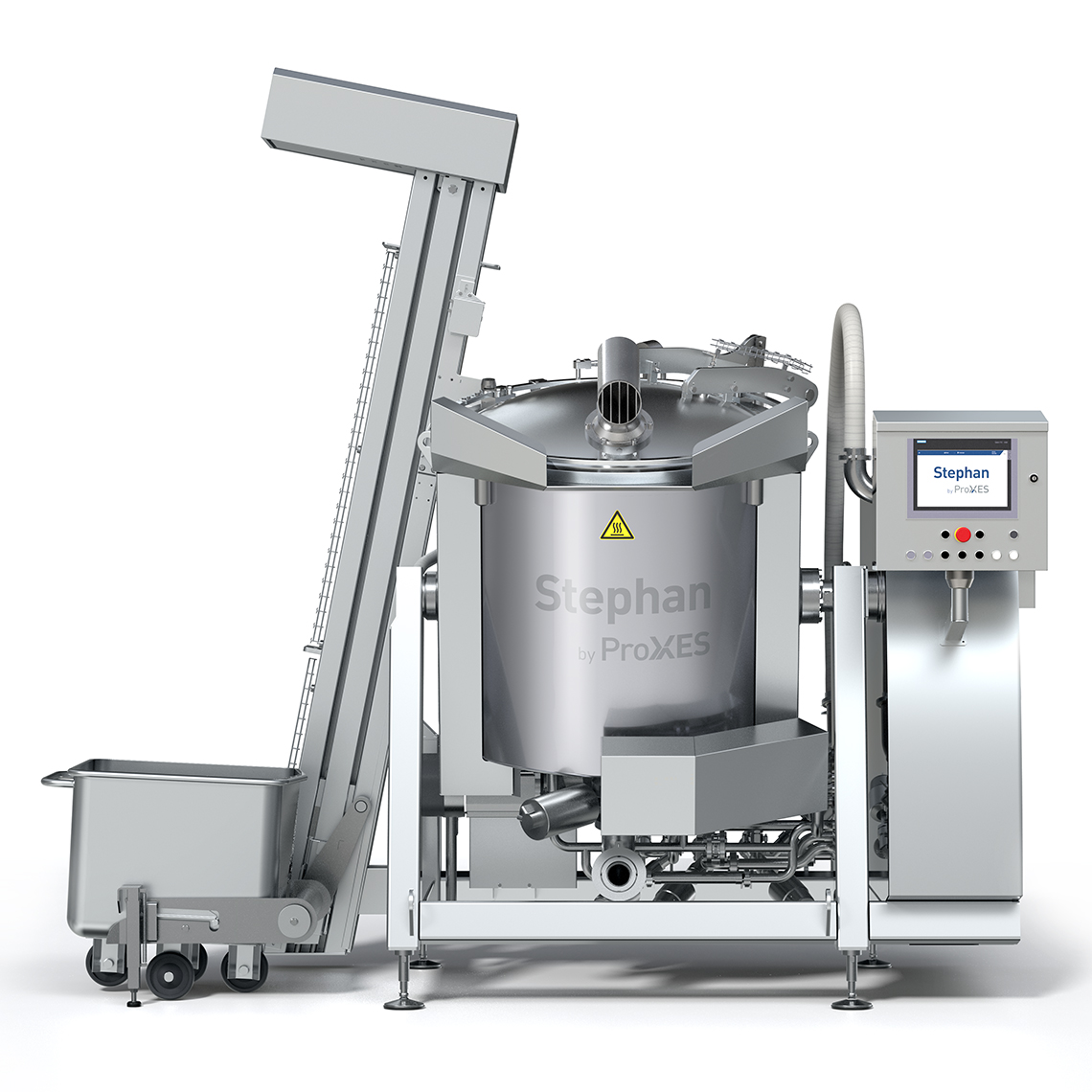
Cook-ItCompact batch cooking solution
- Capacities up to to 3,600 l/hour*
- Functions:
- heating up to 95 °C
- tiltable vessel
- direct steam injection
- double jacket heating and cooling
- Main applications:
- Stew, soups and sauces
- Side dishes
- Processed cheese
*Application: low viscous products

Download our latest brochure to find out more about our products.
-
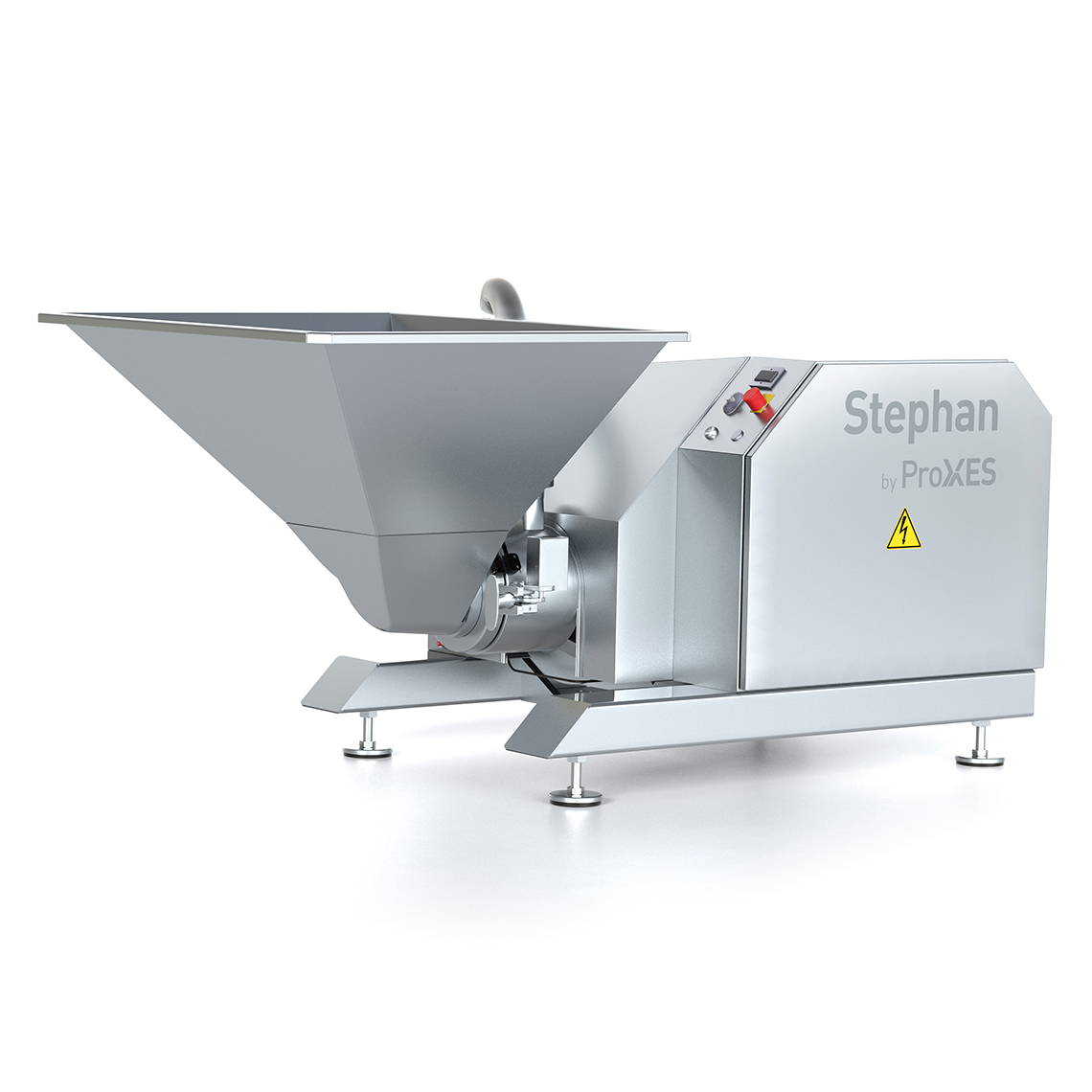
Microcutperfect for fine cutting and emulsifying
- Capacities up to 4,500 l/hours (stand alone setup)*
- Capacities up to 15,000 l/hours (inline setup)*
- Functions:
- cutting
- dispersing
- emulsifying
- homogenizing
- Main applications:
- rework
- meat emulsions
- vegetable grinding
*Application: low viscous products
** Exemplary illustration
Download our latest brochure to find out more about our products.
-
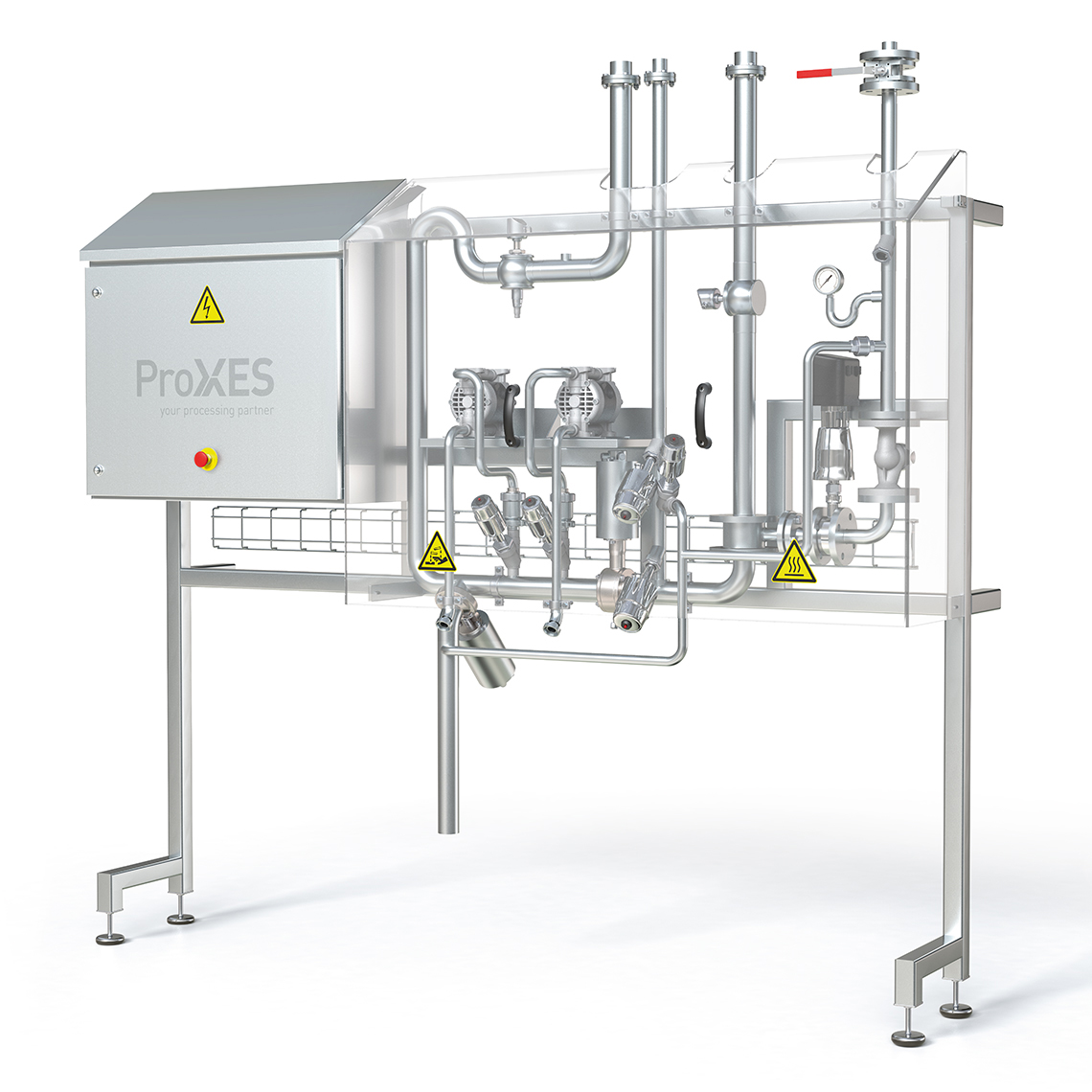
ProCIP CompactInternal single-use cleaning
- Single- use and recovery systems
- Tank capacities up to 20.000 l
- Throughput up to 50m³/h
- Functions:
- Preparation of cleaning solutions
- Storage of cleaning solutions (Recovery)
- Distribution of cleaning solutions
- Monitoring
- Reporting
- Main applications:
- Tank cleaning
- Pipe cleaning
- Combined cleaning objects
-
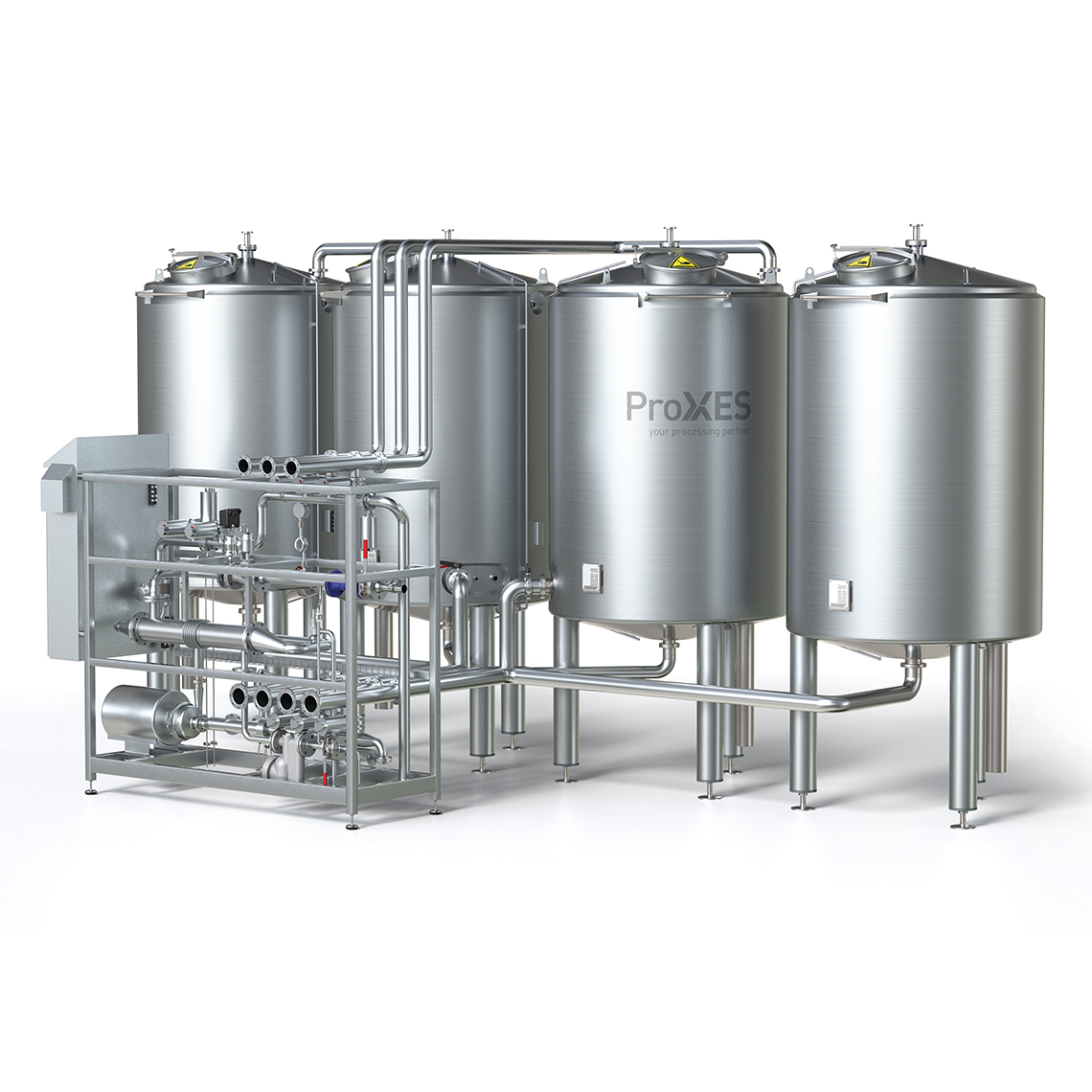
ProCIP RecoveryExternal recovery re-use cleaning
- Single- use and recovery systems
- Tank capacities up to 20.000 l
- Throughput up to 50m³/h
- Functions:
- Preparation of cleaning solutions
- Storage of cleaning solutions (Recovery)
- Distribution of cleaning solutions
- Monitoring
- Reporting
- Main applications:
- Tank cleaning
- Pipe cleaning
- Combined cleaning objects
-
ProCIP SExternal batch single- cleaning
- Single- use and recovery systems
- Tank capacities up to 20.000 l
- Throughput up to 50m³/h
- Functions:
- Preparation of cleaning solutions
- Storage of cleaning solutions (Recovery)
- Distribution of cleaning solutions
- Monitoring
- Reporting
- Main applications:
- Tank cleaning
- Pipe cleaning
- Combined cleaning objects
**illustrative example
-
SAMAseptic multifunctional processing unit
- Capacities up to 1,600 l/hour*
- Functions:
- heat- processing (direct)
- cooling (indirect / condensing)
- CIP
- SIP
- Main applications:
- baby / senior food
- pureed food / fruit puree
- classical sauces
- sauces & soups with particles
- fruit preparations
- desserts/ milk desserts
*Application: low viscous products
-
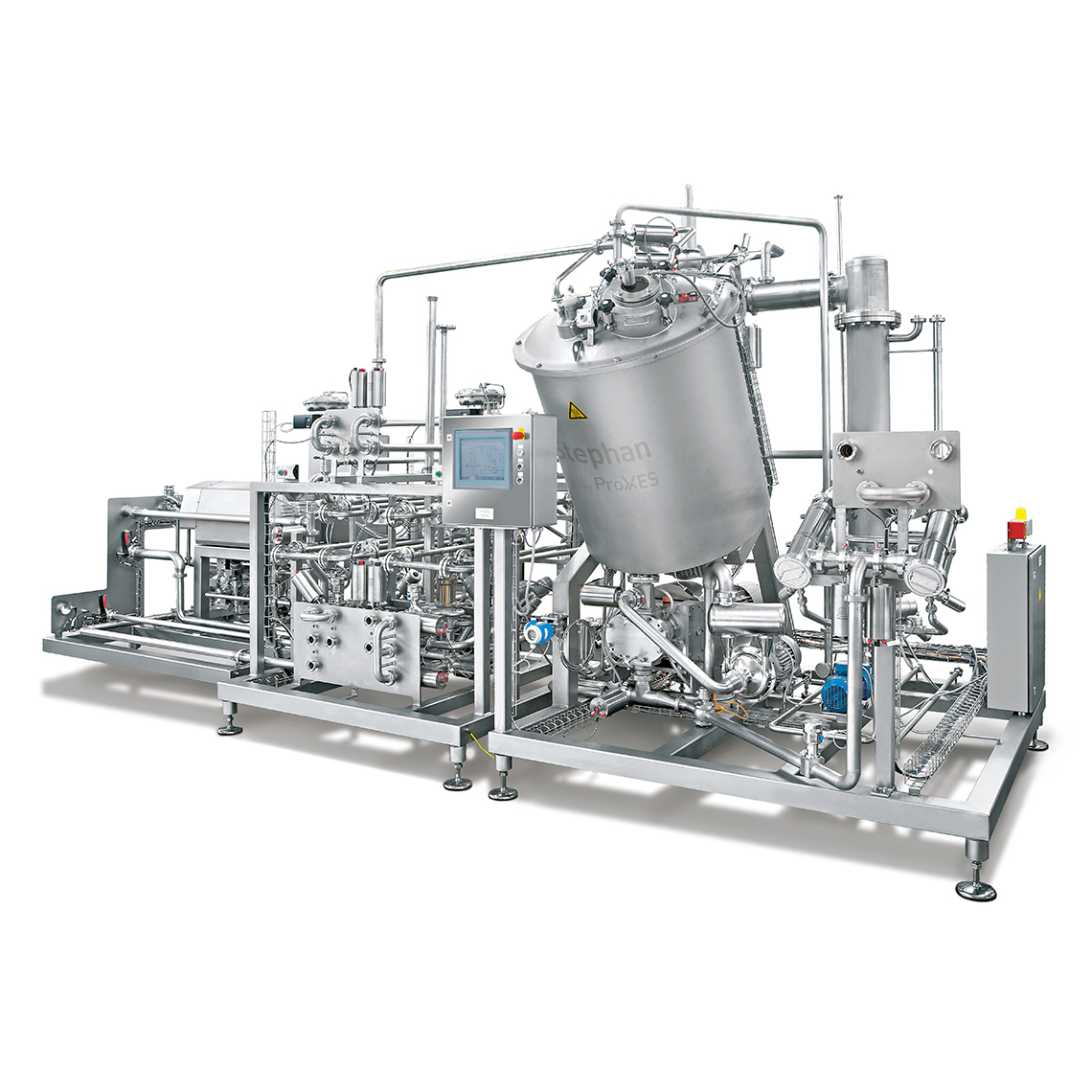
UHT SystemContinuous ultra-high temperature processor
- Capacities up to 6,000 kg/hour
- Functions:
- pre- heating if required
- heating up to 145 °C
- vacuum deaeration
- Flash- cooling down to 80…85°C
- Creaming
- Homogenizing if required
- Main applications:
- Heat treatment of processed cheese from low to high viscosity

Download our latest brochure to find out more about our products.
-
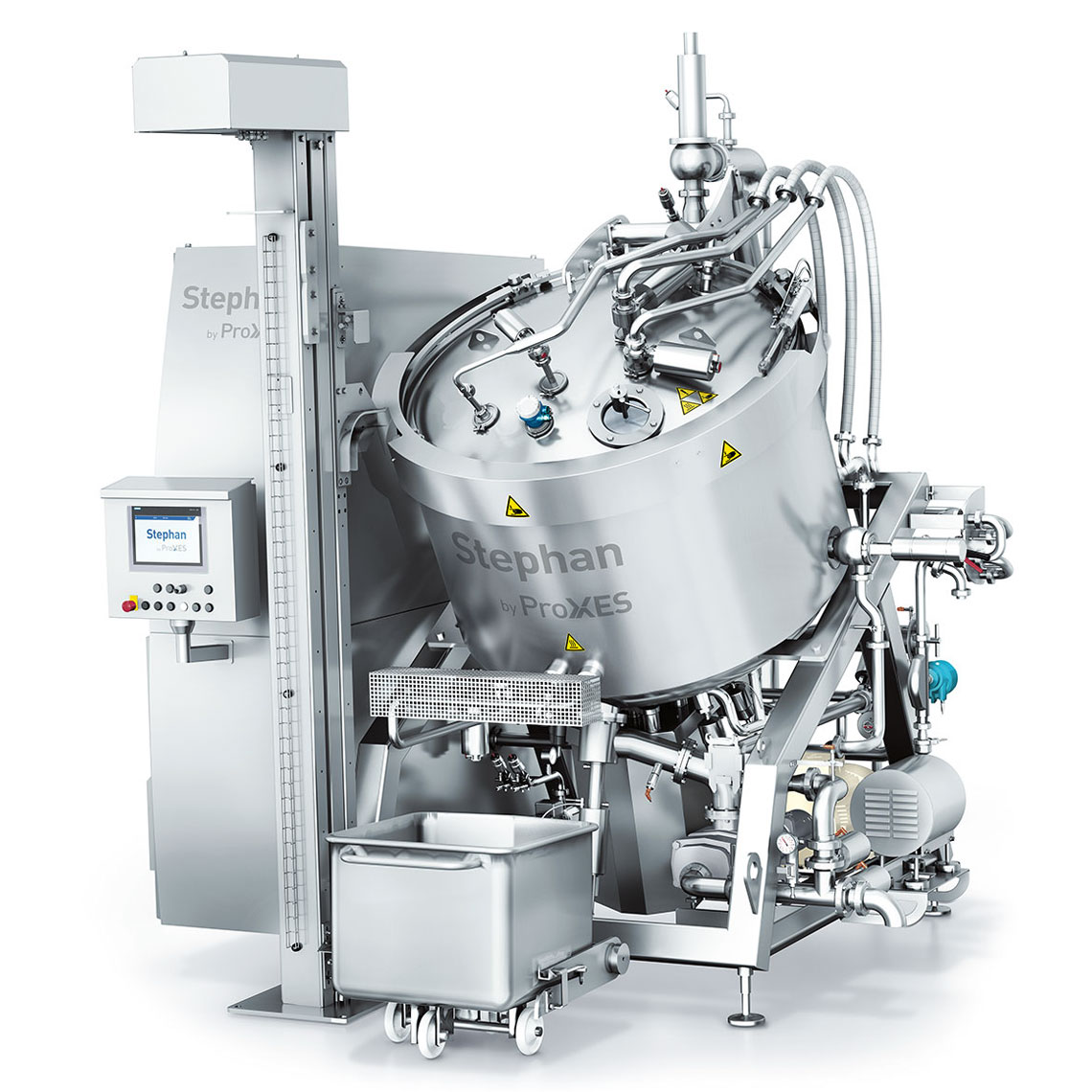
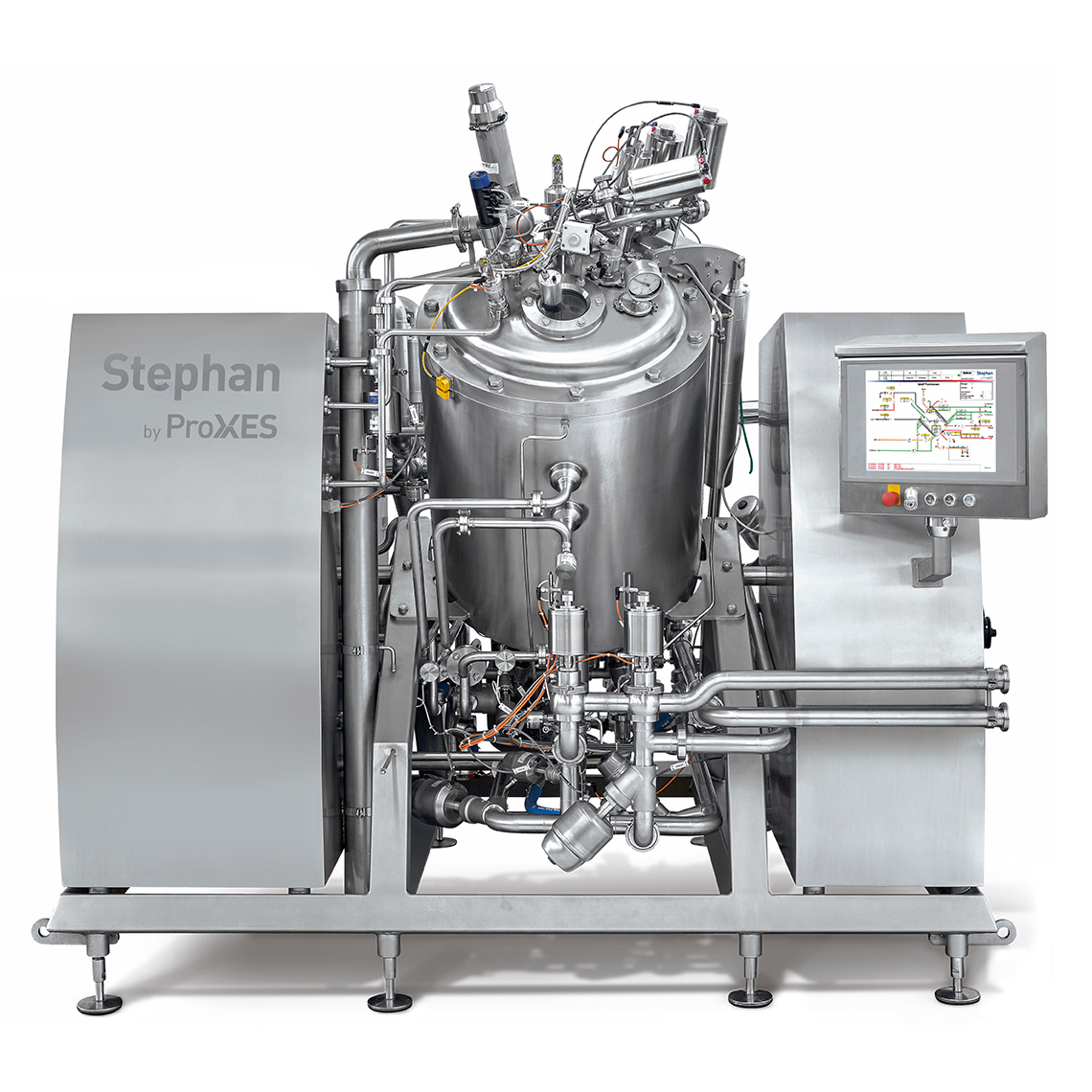
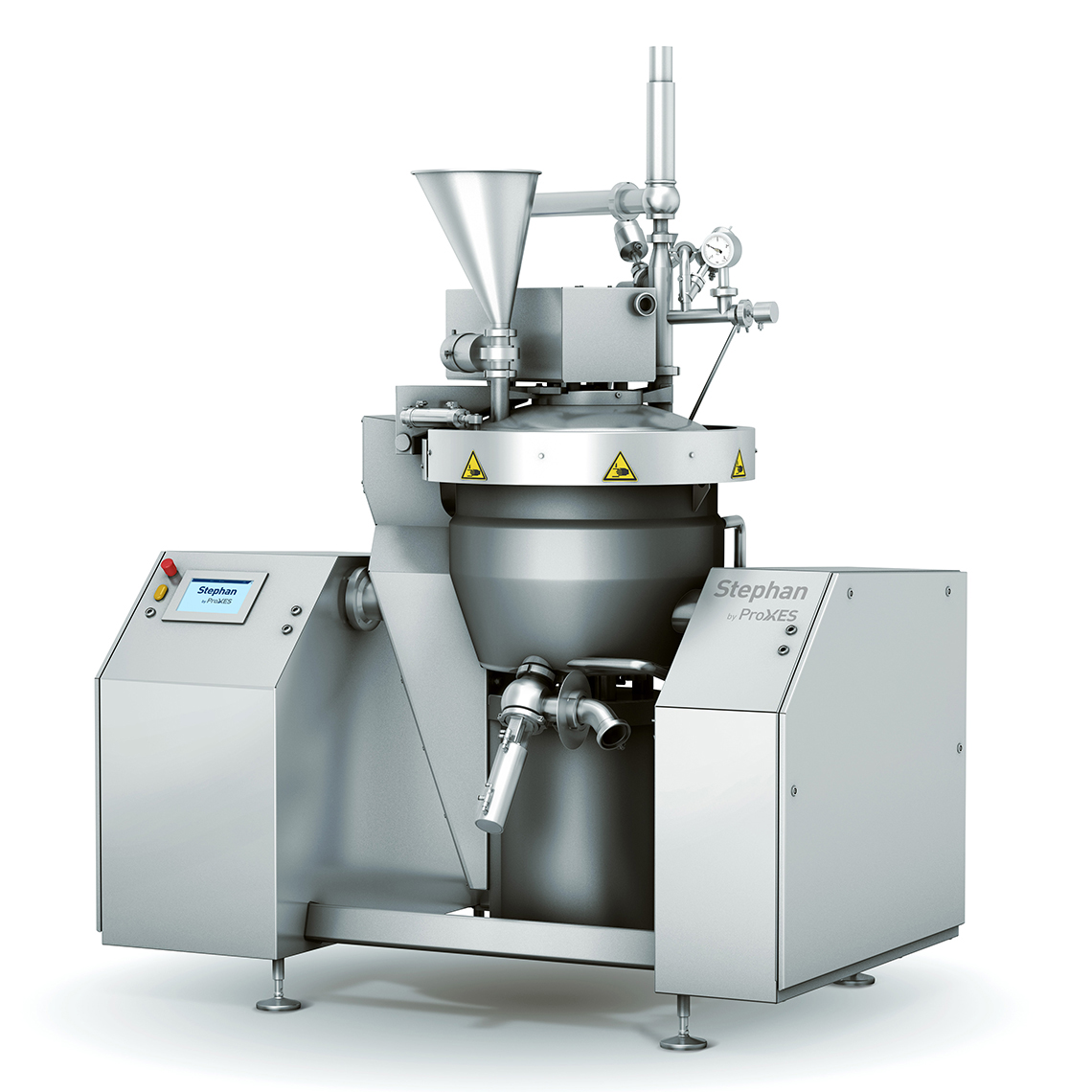
Universal Machine Perfect for small & medium batches
- Capacities up to 1000 l/hour*
- From lab to industrial scale
- Functions:
- direct/indirect heating up to 125 °C
- Vacuum processing
- Mixing, cutting and emulsifying
- indirect cooling via double jacket
- Main applications:
- dairy (processed cheese)
- convenience food (purées, saucen)
- confectionary (ganache)
*Application: low viscous products
**Exemplary illustration

Download our latest brochure to find out more about our products.
-
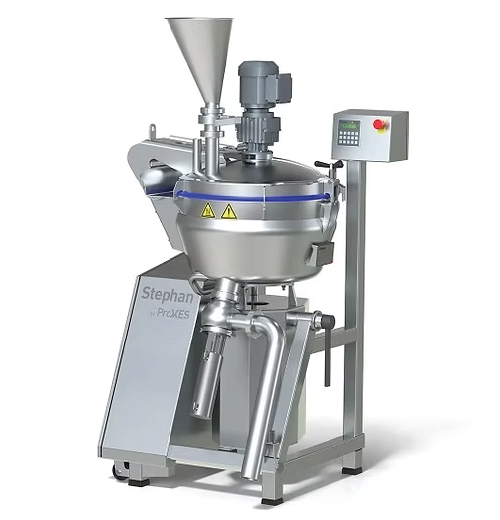
Universal Machine 12Compact universal mixer designed for efficient mixing, emulsifying, and pureeing
Typical Applications:
- Pastries & Dough
- Dressings, sauces
- Mayonnaise, ketchup
- Shredded Cheese
- Pureed food
Advantages:
- Efficient mixing
- Perfect cut
- Pureeing
- Emmulsifying
- Constant product quality
- Easy to operate & clean
- No-contact cutting system
- Versatile dough kneader & blade attachments
Download our latest brochure to find out more about our products.
-
Universal Machine 74Efficient mixing, emulsifying, and pureeing
Typical Applications:
- Pastries & Dough
- Dressings, sauces
- Mayonnaise, ketchup
- Shredded Cheese
- Pureed food
Advantages:
- Efficient mixing
- Perfect cut
- Pureeing
- Emmulsifying
- Constant product quality
- Easy to operate & clean
- No-contact cutting system
- Versatile dough kneader & blade attachments
Download our latest brochure to find out more about our products.
-
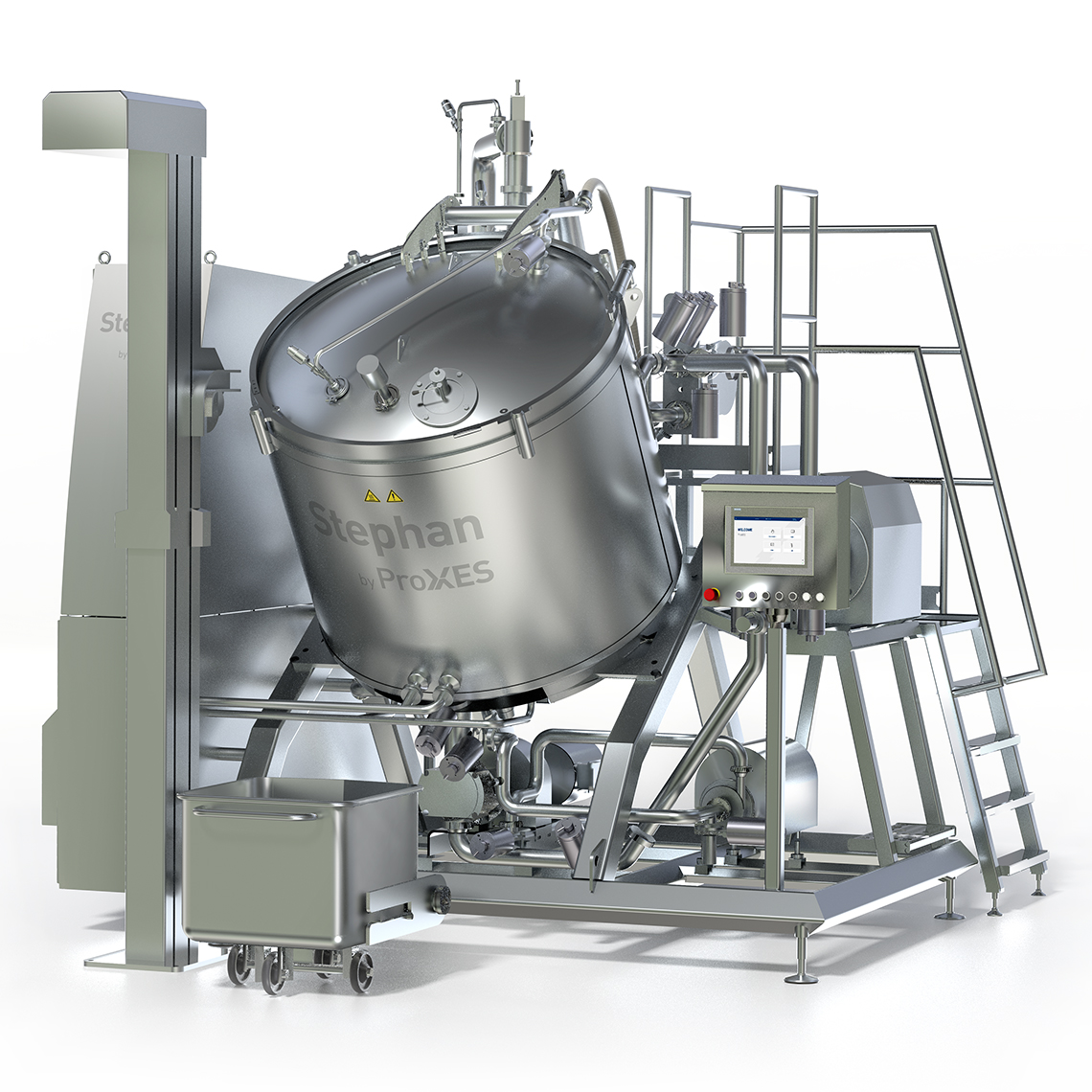
Vacutherm Efficient hot & cold processing
- Capacities up to 4,800 l/hour*
- Functions:
- mixing
- emulsifying
- dispersing
- direct/indirect heating
- indirect cooling
- Vacuum processing
- Main applications:
- mayonnaise
- ketchup
- dressings
- dips
- baby food
- sauces
*Application: low viscous products

Download our latest brochure to find out more about our products.








NEED TO KNOW MORE? GET IN TOUCH WITH OUR EXPERTS.
FAQ – Frequently Asked Questions
Below you find answers to common questions.
-
What types of food products can Stephan machines process?
Stephan machines are designed for a wide range of food applications including processed cheese, mayonnaise, ketchup, dressings, stews, soups and sauces, baby food, pureed food, confectionery (ganache, marzipan), surimi, and vegan cheese alternatives. The modular machine portfolio supports both dairy and convenience food manufacturers at any production scale.
-
What is the production capacity of Stephan food processing machines?
Stephan machines cover capacities from small lab-scale batches to large industrial lines. The Microcut handles up to 15,000 l/hour in an inline setup, the UHT System processes up to 6,000 kg/hour, and batch machines like the Universal Machine are suited for up to 1,000 l/hour. Most batch systems fall in the 1,600–4,800 l/hour range.
-
What processes do Stephan machines combine in a single unit?
Depending on the model, Stephan machines integrate heating (direct and indirect, up to 145°C), cutting, mixing, emulsifying, dispersing, vacuum processing, and cooling into one system. This multi-functionality reduces the need for separate processing equipment and simplifies production line design.
-
Are Stephan machines suitable for aseptic food production?
Yes. The SAM® (Stephan Aseptic Multifunctional Unit) is specifically designed for aseptic processing, enabling sterile production of baby food, pureed food, fruit preparations, desserts, and sauces with particles without the risk of post-process contamination.
-
Can Stephan machines handle UHT processing?
Yes. The Stephan UHT System enables continuous ultra-high temperature processing at up to 145°C for heat treatment of processed cheese across a full range of viscosities. It includes pre-heating, vacuum deaeration, flash-cooling, creaming, and optional homogenizing in a single continuous process.
-
How long has Stephan been manufacturing food processing equipment?
Stephan has been developing and manufacturing food processing machines for over 60 years. As part of the ProXES Group, the brand continues to deliver tailor-made solutions to leading food manufacturers worldwide, with a strong focus on dairy, convenience, and confectionery sectors.
-
How long has Stephan been manufacturing food processing equipment?
Stephan has been developing and manufacturing food processing machines for over 60 years. As part of the ProXES Group, the brand continues to deliver tailor-made solutions to leading food manufacturers worldwide, with a strong focus on dairy, convenience, and confectionery sectors.
-
Is Stephan equipment scalable from lab to industrial production?
Yes. Stephan offers equipment from laboratory-scale units for recipe development and process validation to full industrial production lines. This continuity allows food manufacturers to scale up without changing fundamental process parameters, protecting formulation integrity during the transition.