

Proxx D: Innowacyjna homogenizacja zapewniająca najwyższą jakość produktu
Większa prędkość, większa wydajność, większa pojemność - ProxxD® przenosi produkcję homogenizowanych i rozproszonych produktów spożywczych na wyższy poziom. Oparty na sprawdzonym i udanym modelu FrymaKoruma MaxxD, ale z ulepszonym homogenizatorem i zwiększoną wydajnością produkcyjną do 6000 kg, ProxxD® znacznie zwiększa korzyści produkcyjne.
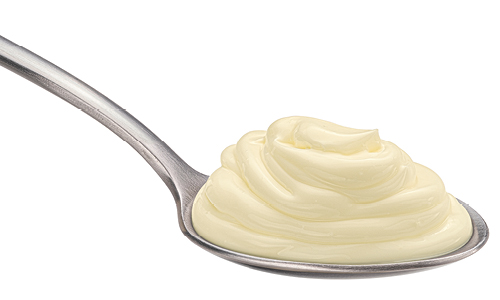
What Is an Industrial Homogenizer?
An industrial homogenizer is process equipment that reduces the droplets or particles of one phase and distributes them evenly through a second phase, so that the resulting product no longer separates. In a mayonnaise or sauce application this means dispersing oil into a water phase until the droplet size distribution is narrow enough to keep the emulsion stable throughout its shelf life. The decisive parameter is not throughput but control: an industrial homogenizer must reach the same droplet size in every batch, at every scale, regardless of oil content or ambient temperature. Homogenizers differ mainly in how they introduce the required energy – through mechanical shear in a rotor-stator gap, through pressure drop across a valve, or through ultrasound – and each principle suits a different viscosity and throughput range.
How a ProxxD Batch Runs: The Process Steps
The ProxxD processes each batch in a defined, fully programmable sequence. Every step is logged, so a batch can be reproduced or traced later:
- Recipe selection and preparation: The operator selects a stored recipe on the ProUI touch panel. All process parameters – temperatures, dosing rates, homogenizer speed and holding times – are loaded with it, which removes manual parameter entry as a source of batch variation.
- Water phase preparation: Water, vinegar, salt, sugar, stabilisers and egg or plant-based protein are dosed into the vessel and pre-mixed. Temperature is controlled through the closed cooling circuit from this point onward.
- Oil dosing: Oil is metered into the running process at up to 3.0 kg/s. Dosing speed is the single biggest lever on batch time in mayonnaise production, because the oil phase has to be introduced gradually enough for the emulsion to form but fast enough not to stall the cycle.
- Homogenization and droplet size control: The homogenizer disperses the oil phase into fine droplets and holds the droplet size distribution within the programmed window. This is the step that determines viscosity, mouthfeel and separation stability of the finished product.
- Vacuum deaeration: Entrained air is removed under vacuum. Air pockets shorten shelf life through oxidation, cause density variation at the filler and dull the visual appearance of the product.
- Temperature control and discharge: The batch is brought to discharge temperature through the closed cooling circuit and transferred to buffer or filling. Closed circuits keep water consumption to a minimum compared with once-through cooling.
- Process logging and cleaning: Every batch is logged through ProUI for quality documentation and traceability. The system is then cleaned before the next recipe, which is where the ability to store and recall recipes pays off in multi-product plants.
Key Challenges in Industrial Sauce and Emulsion Production
Producers of mayonnaise, dressings and cold sauces face a recurring set of technical and commercial constraints:
- Holding droplet size distribution constant across batches, shifts and raw material lots
- Preventing emulsion breakdown during storage, transport and temperature cycling
- Producing low-fat and reduced-fat recipes, which are far less forgiving than full-fat formulations because there is less oil to stabilise
- Cutting batch time without losing emulsion quality – oil dosing speed is usually the bottleneck
- Reducing specific energy consumption per ton at a time when energy is a visible cost block
- Switching between recipes and pack formats without long cleaning and setup downtime
- Documenting every batch for quality management and customer audits
- Scaling a recipe from development to full production without reformulating it
The ProxxD addresses these constraints through programmable process control rather than operator experience: recipes are stored, parameters are locked to the recipe, and every batch is logged. That is what makes a result repeatable across shifts.
The ProxxD Series: Technical Data
The ProxxD is available in a basic configuration that can be extended in modules. The following figures apply to the basic concept:
| Parameter | Wert |
|---|---|
| Production capacity, full-fat mayonnaise | up to 6,000 kg/h* |
| Production capacity, low-fat mayonnaise (30 % oil) | up to 4,000 kg/h* |
| Oil dosing rate | up to 3.0 kg/s |
| Specific energy input | 5 kWh/ton on average |
| Batch volume | 500 l |
| Dimensions (basic concept) | L 230 × H 280 × W 210 cm |
| Weight | approx. 2,000 kg |
| Control system | ProUI process user interface with recipe management and process logging |
| Base technology | FrymaKoruma MaxxD platform with redesigned homogenizer |
* Based on FrymaKoruma standard recipes for full-fat mayonnaise.
Zalety naszego wysokowydajnego emulgatora Proxx D
-
MAKSYMALNA WYDAJNOŚĆ
Dzięki najnowszemu homogenizatorowi, ProxxD® zwiększa wydajność produkcyjną lub zmniejsza liczbę wymaganych zmian produkcyjnych przy tej samej wydajności.
-
NAJWYŻSZA JAKOŚĆ PRODUKTU
ProxxD i jego nowy homogenizator, który wyewoluował z dobrze sprawdzonej technologii MaxxD, umożliwia producentom osiągnięcie najwyższej jakości produktu.
-
NAJWYŻSZA WYDAJNOŚĆ ENERGETYCZNA
Najnowszej klasy silniki elektryczne, większa wydajność produkcji i krótsze czasy wsadów skutkują wyższą efektywnością energetyczną całego systemu. Dzięki zamkniętym obiegom chłodzenia, zużycie wody jest również zredukowane do minimum.
-
SUPERSZYBKIE DOZOWANIE OLEJU
Dzięki najszybszemu dozowaniu oleju na rynku, a tym samym szybkiemu i wydajnemu tworzeniu emulsji, ProxxD osiąga znacznie krótsze czasy wsadowe.
-
MAKSYMALNA ŁATWOŚĆ OBSŁUGI
Dzięki procesowemu interfejsowi użytkownika ProUI, ProxxD posiada najnowocześniejszą automatykę dla instalacji procesowych na rynku. Szeroki zakres pomocnych funkcji, takich jak "receptura" lub "rejestrowanie procesu" na intuicyjnym panelu dotykowym, przyczynia się do pozytywnego doświadczenia użytkownika.
-
SZYBSZY ZWROT Z INWESTYCJI
ProxxD® to wysoce wszechstronny system, który można łatwo dostosować do konkretnych potrzeb przetwarzania. Zaprojektowany z myślą o trwałości i wydajności, ProxxD® jest cenną inwestycją w zapewnienie sobie przyszłej pozycji rynkowej na lata.
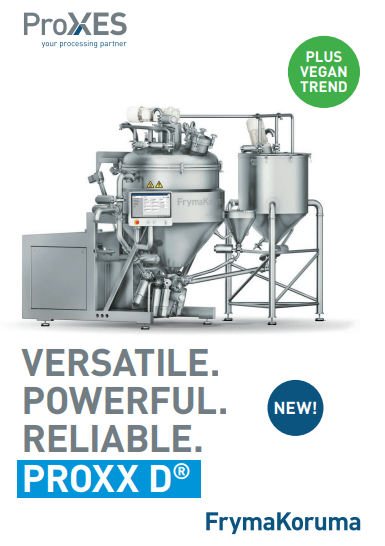
Pobierz naszą broszurę, aby dowiedzieć się więcej.
CHCESZ WIEDZIEĆ WIĘCEJ? SKONTAKTUJ SIĘ Z NASZYMI EKSPERTAMI.
Najczęściej zadawane pytania – Przetwórstwo dipów i past do smarowania
Poniżej znajdziesz odpowiedzi na najczęściej zadawane pytania.
-
W jaki sposób na skalę przemysłową wytwarza się sosy i pasty do smarowania?
-
Jaka jest różnica między obróbką na gorąco a na zimno w przypadku dipów i past do smarowania?
-
Czy różne receptury mogą być realizowane na tej samej linii?
-
Jakie maszyny są wykorzystywane w przemysłowej produkcji sosów i past do smarowania?
-
Jakiej wydajności produkcyjnej mogę się spodziewać?
-
What is the difference between the ProxxD and the FrymaKoruma MaxxD?
The ProxxD is built on the MaxxD platform but uses a redesigned homogenizer and reaches a higher production capacity. It also adds the ProUI process interface with recipe management and process logging, and the latest class of electric motors, which lowers specific energy consumption. The droplet size control principle that made the MaxxD reliable is retained unchanged.