

Innowacyjna technologia procesowa do produkcji napojów wegańskich
Uzyskanie świeżych soków owocowych lub warzywnych, smoothies lub aromatów do produktów mlecznych oraz dostarczenie konsumentom prawdziwego smaku i prostoty może być wyzwaniem bez odpowiedniej technologii. Nawet wysiłek ze strony formulatorów może być bezwartościowy, jeśli nie zacznie się od dobrze skroplonych, ale nie nadmiernie przetworzonych składników.
Wraz z rosnącym popytem na alternatywne produkty mleczne, każdy kilogram źródła białka roślinnego, takiego jak soja, który nie jest ekstrahowany dzięki optymalnej wielkości cząstek, przekłada się na wyższą wydajność przetwarzania.
Migdały, orzechy włoskie, orzechy nerkowca, orzeszki ziemne, sezam i wiele innych rodzajów orzechów i nasion są doskonałym źródłem dobrego tłuszczu, a jednocześnie są naturalnie bezglutenowe. Wykorzystanie ich jako głównego składnika w wielu procesach upłynniania i przetwarzania drobnoziarnistego robi prawdziwą różnicę.
W zależności od konkretnych potrzeb, ProXES oferuje modułowe linie i koncepcje wsadowe, obejmujące precyzyjne dozowanie składników, wydajne mielenie, równomierną kontrolę temperatury i odpowietrzanie dla lepszego okresu przydatności do spożycia. Optymalna konstrukcja do obsługi produktów o lepkości od niskiej do wysokiej, niezawodne działanie z różnymi poziomami automatyzacji i wiele innych funkcji zapewni niezbędną elastyczność w osiągnięciu najlepszej konfiguracji produkcji.
What Is Plant-Based Drink Production?
Plant-based beverage production, also referred to as vegan beverage production, is the industrial process of transforming raw plant materials, such as oats, almonds, cashews, soybeans, peas, rice, or seeds, into stable, high-quality liquid beverages. The goal is to achieve optimal particle size reduction, homogeneous dispersion of plant proteins and fats, and a smooth, consistent texture without artificial additives.
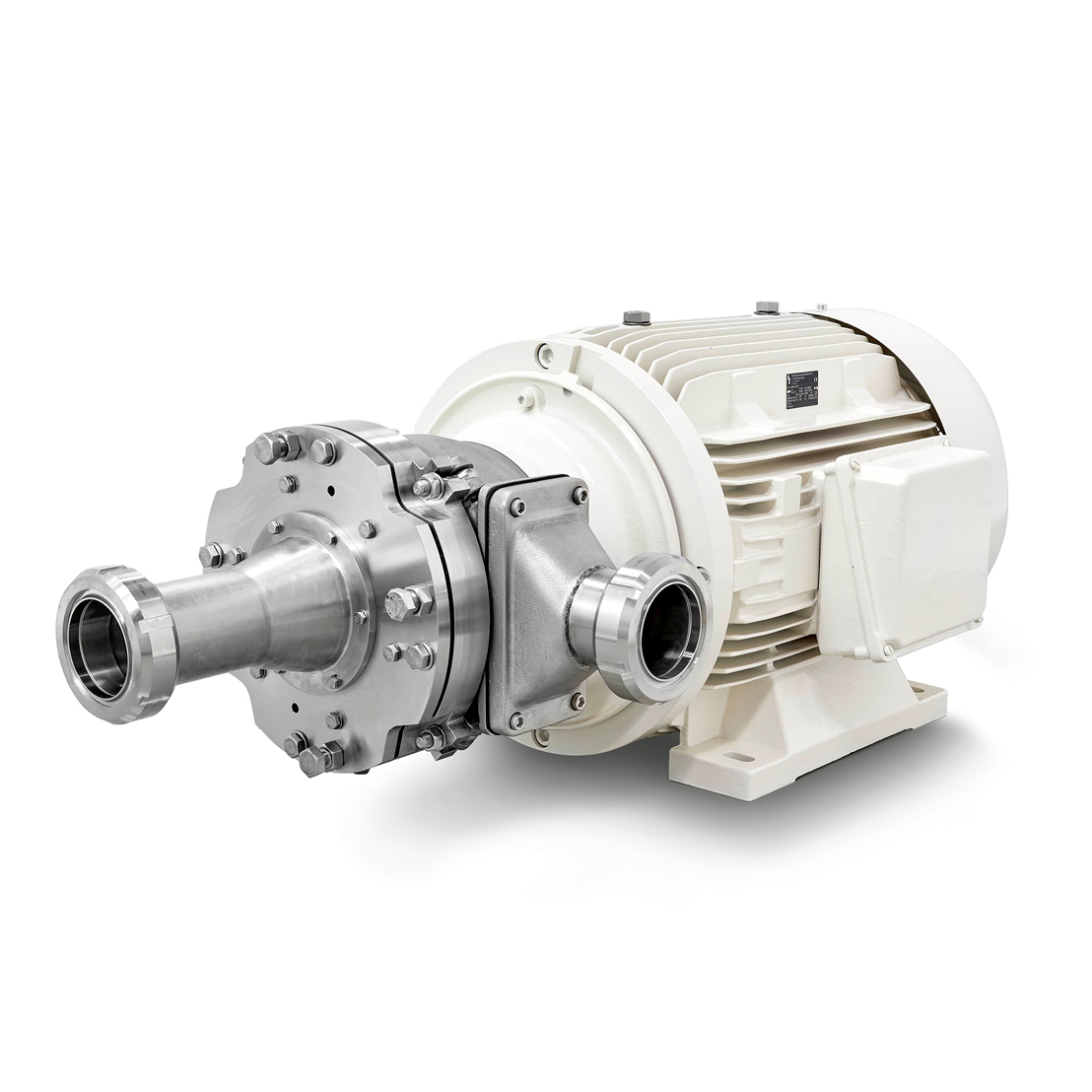
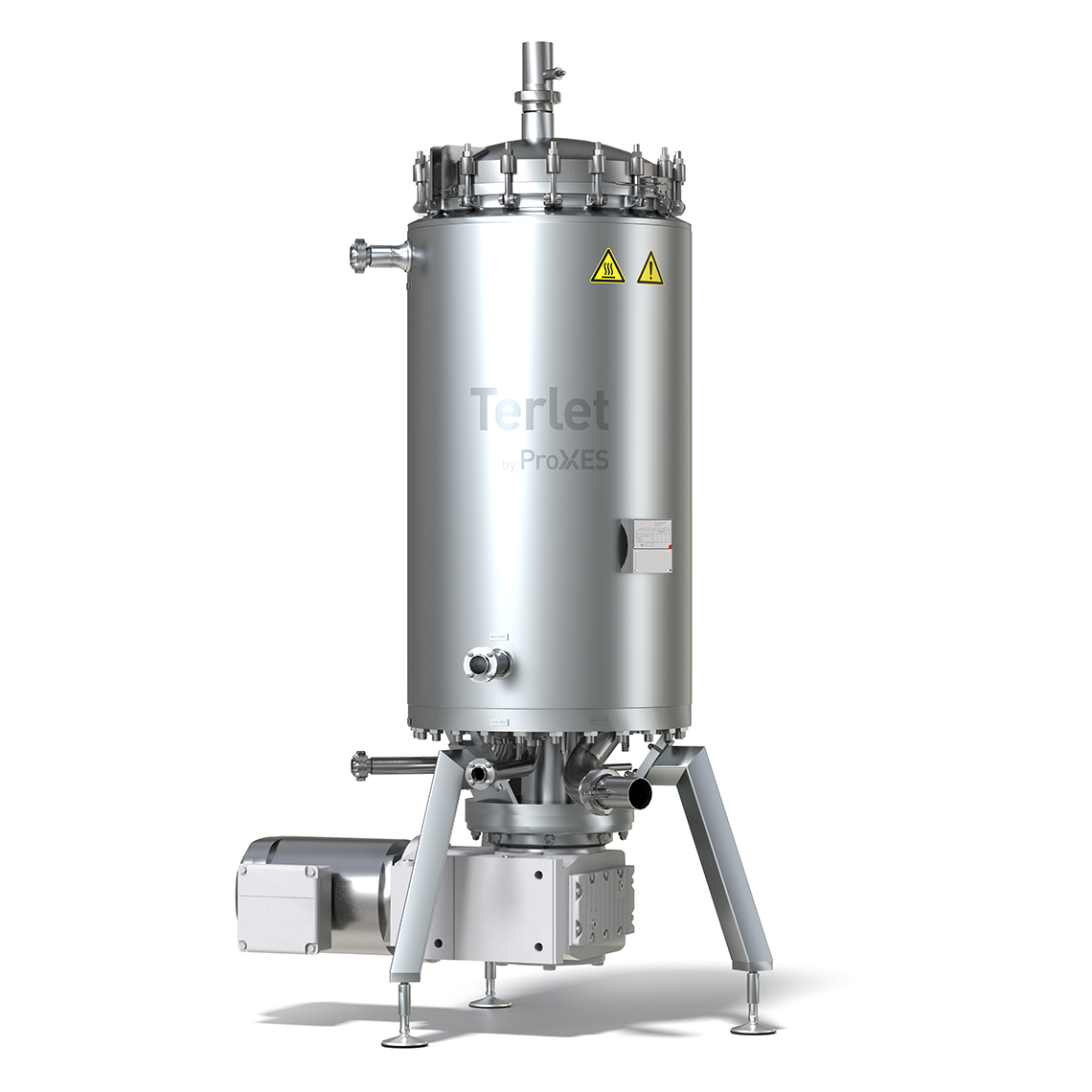
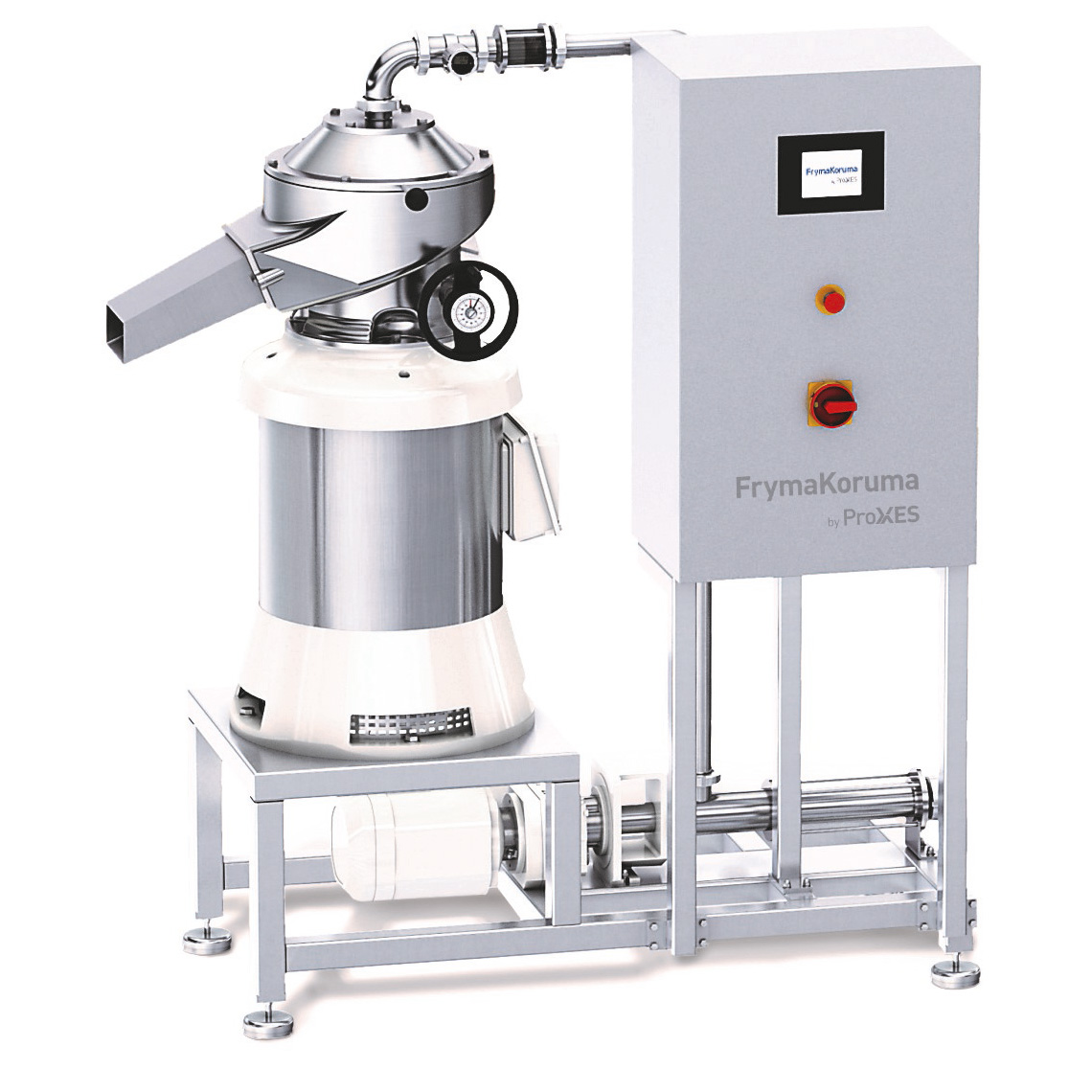
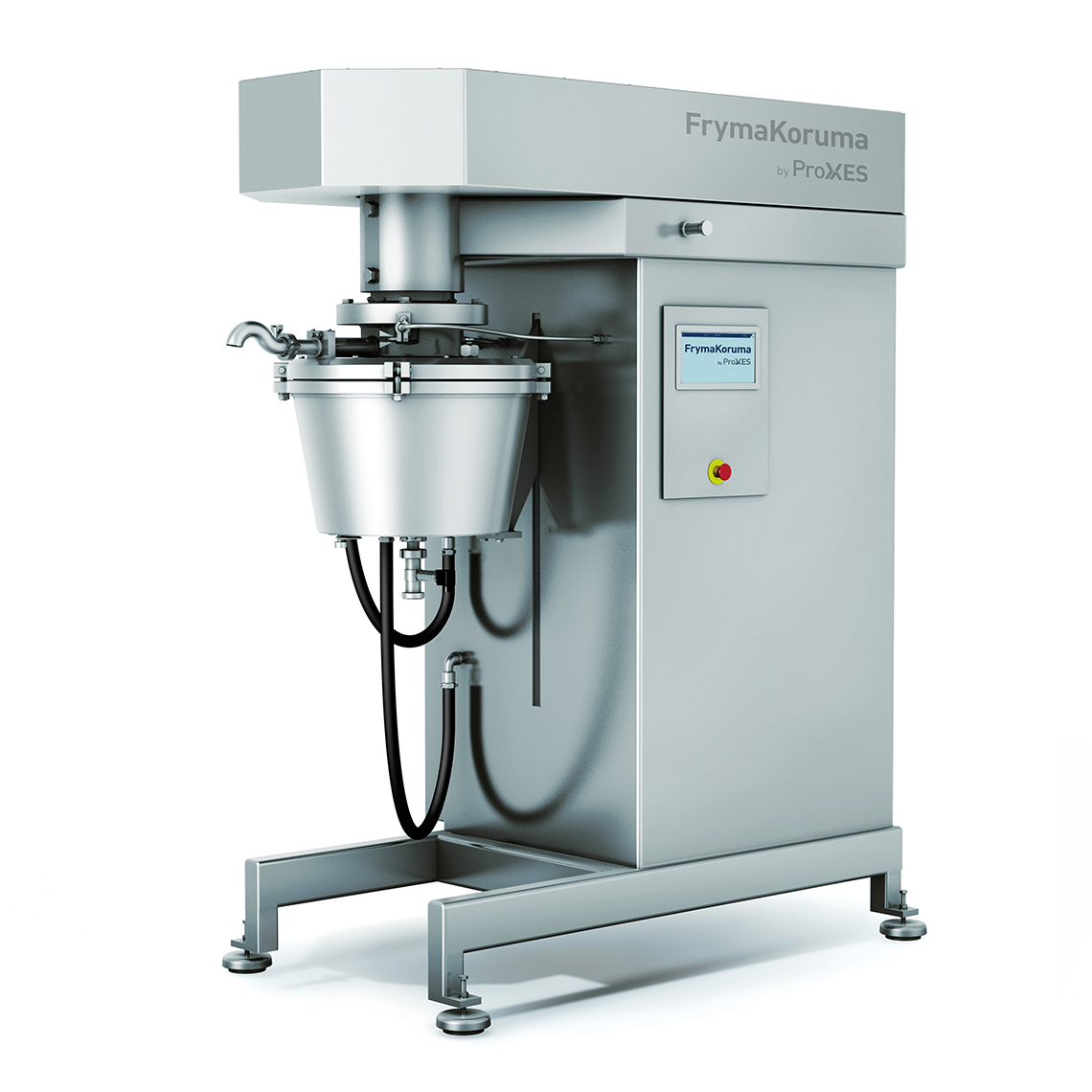
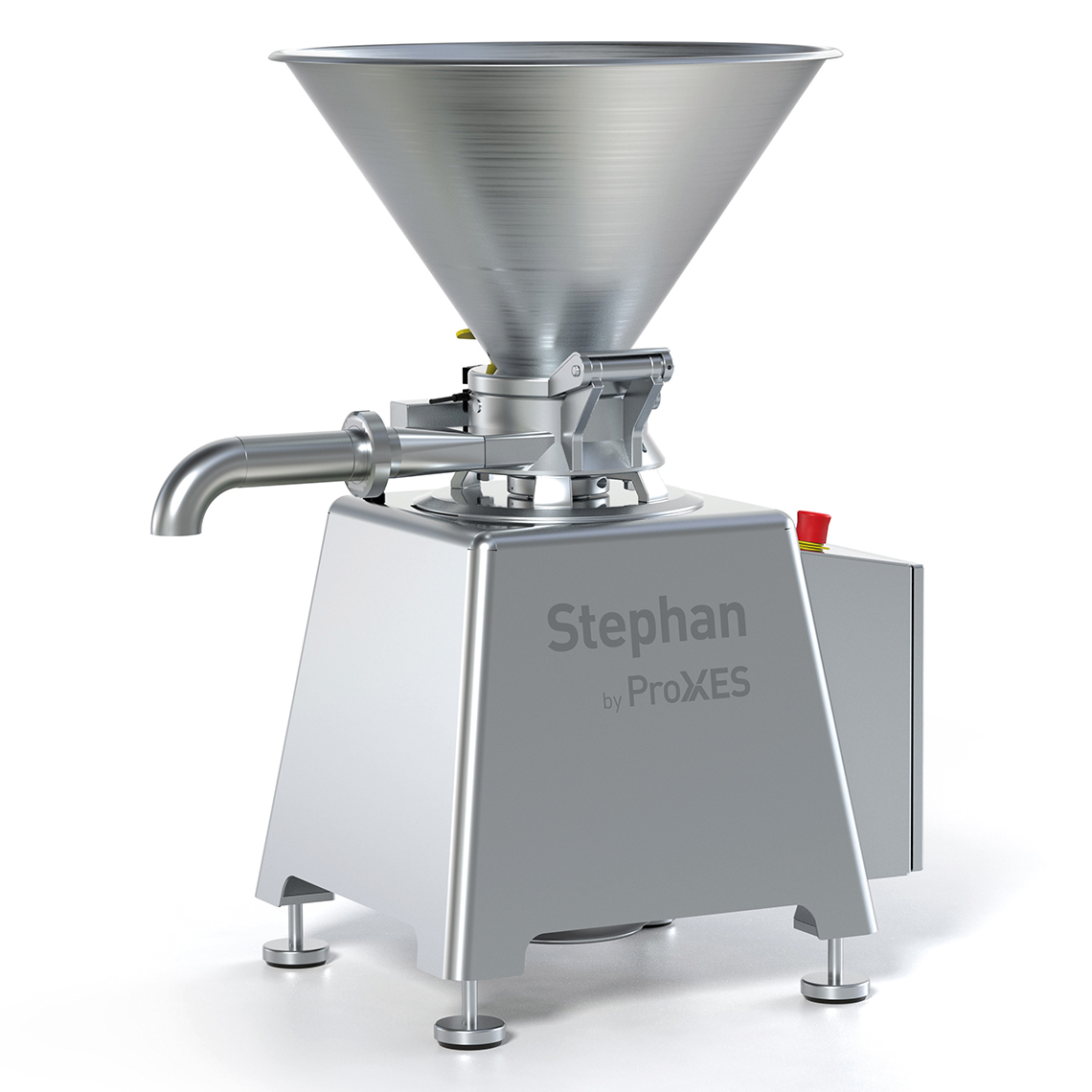
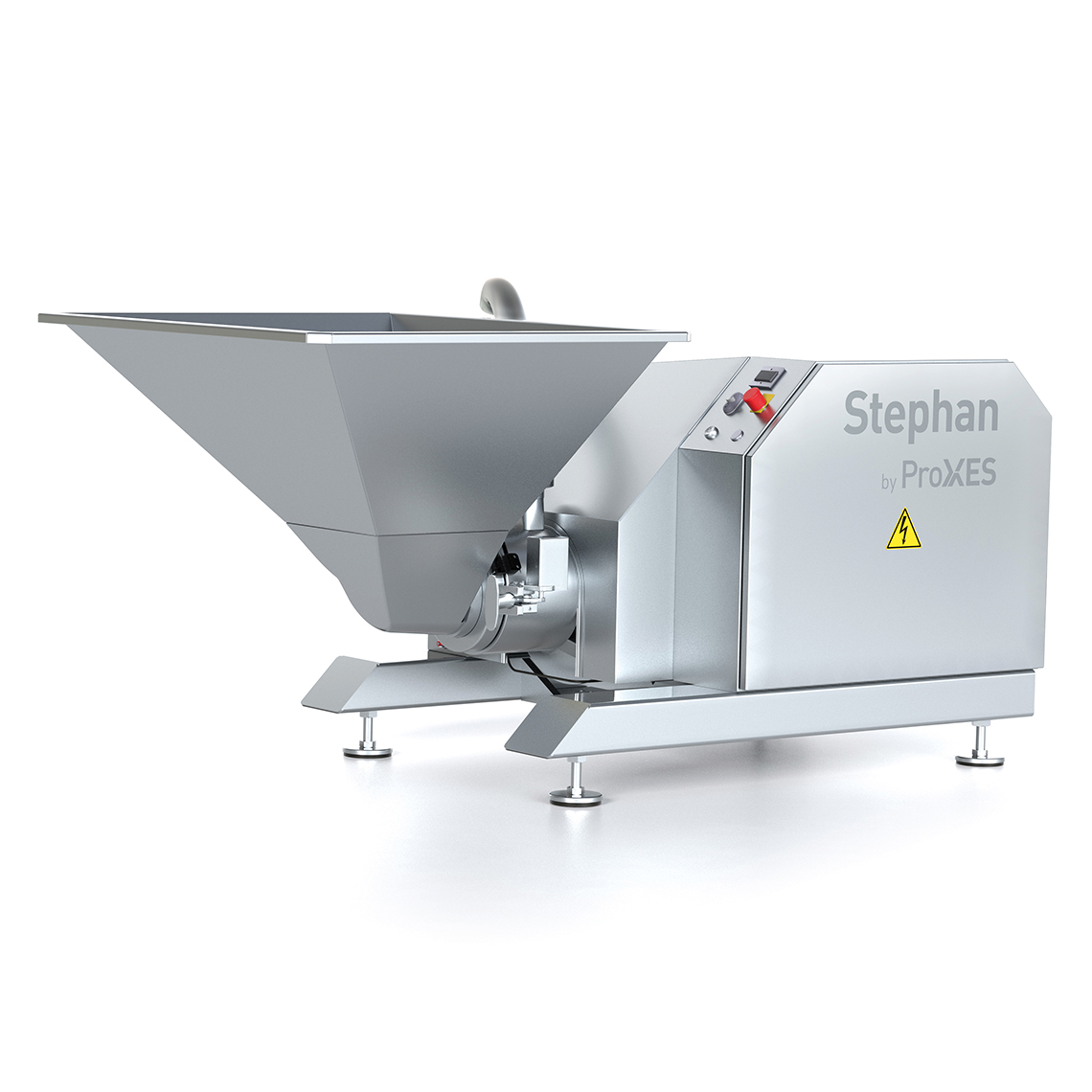
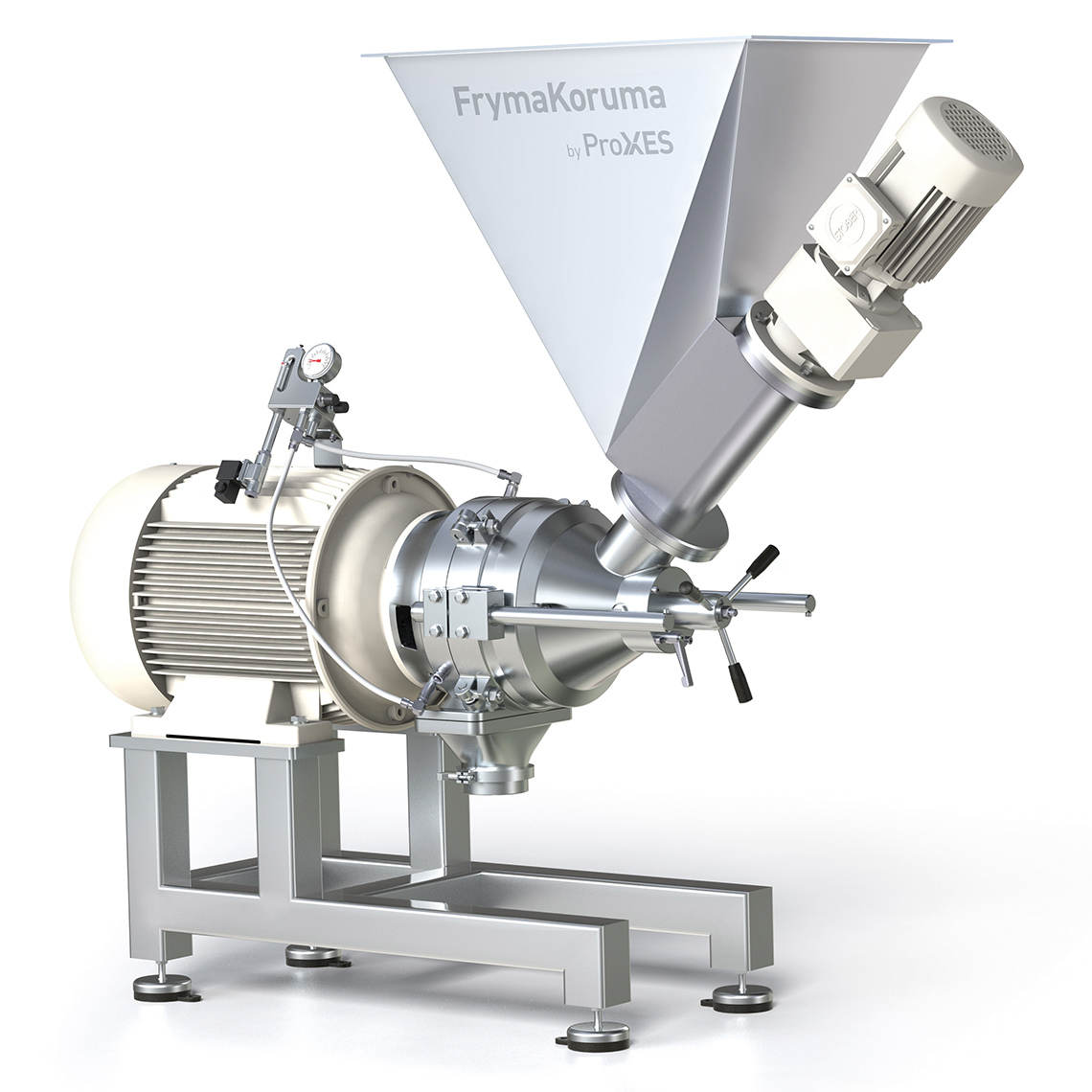
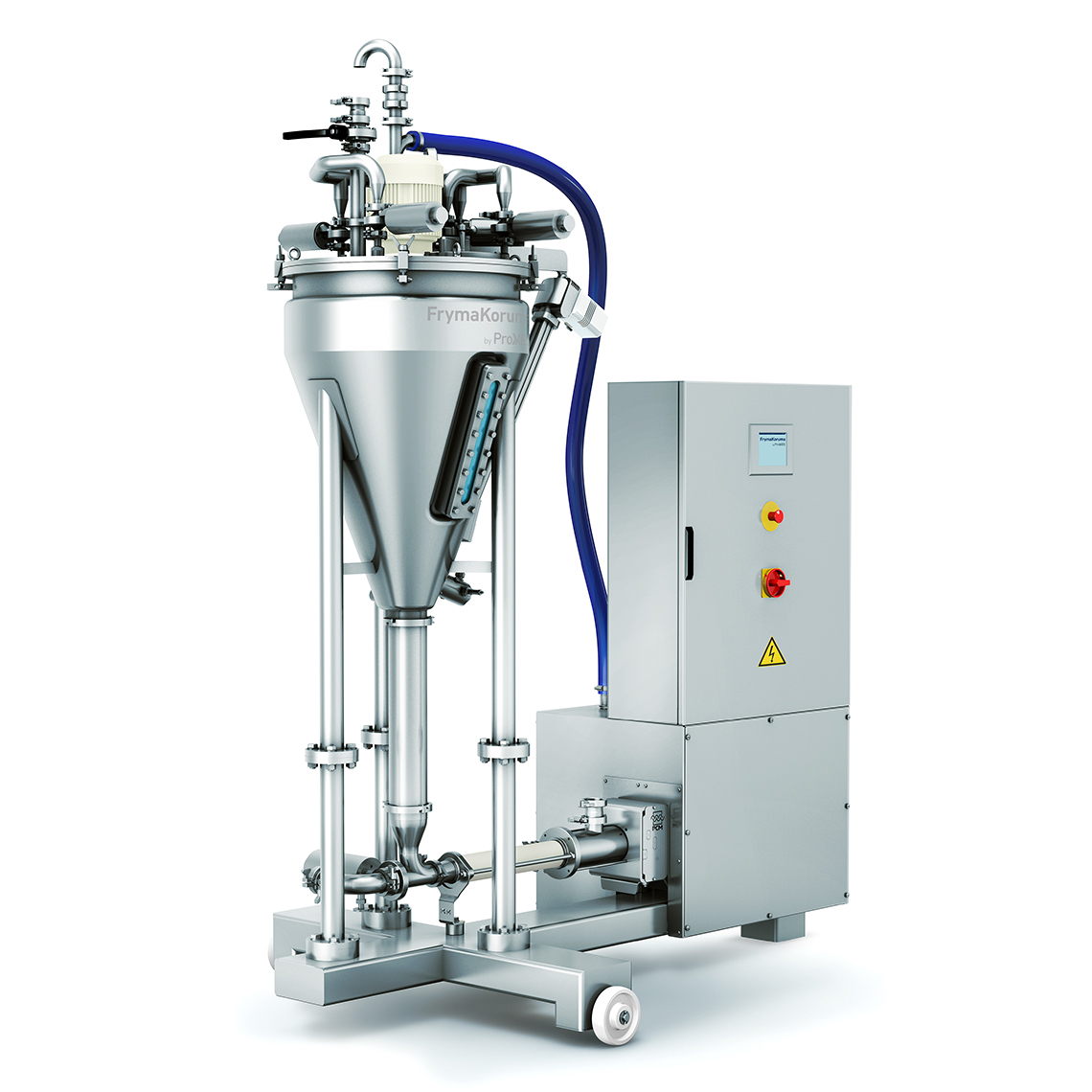
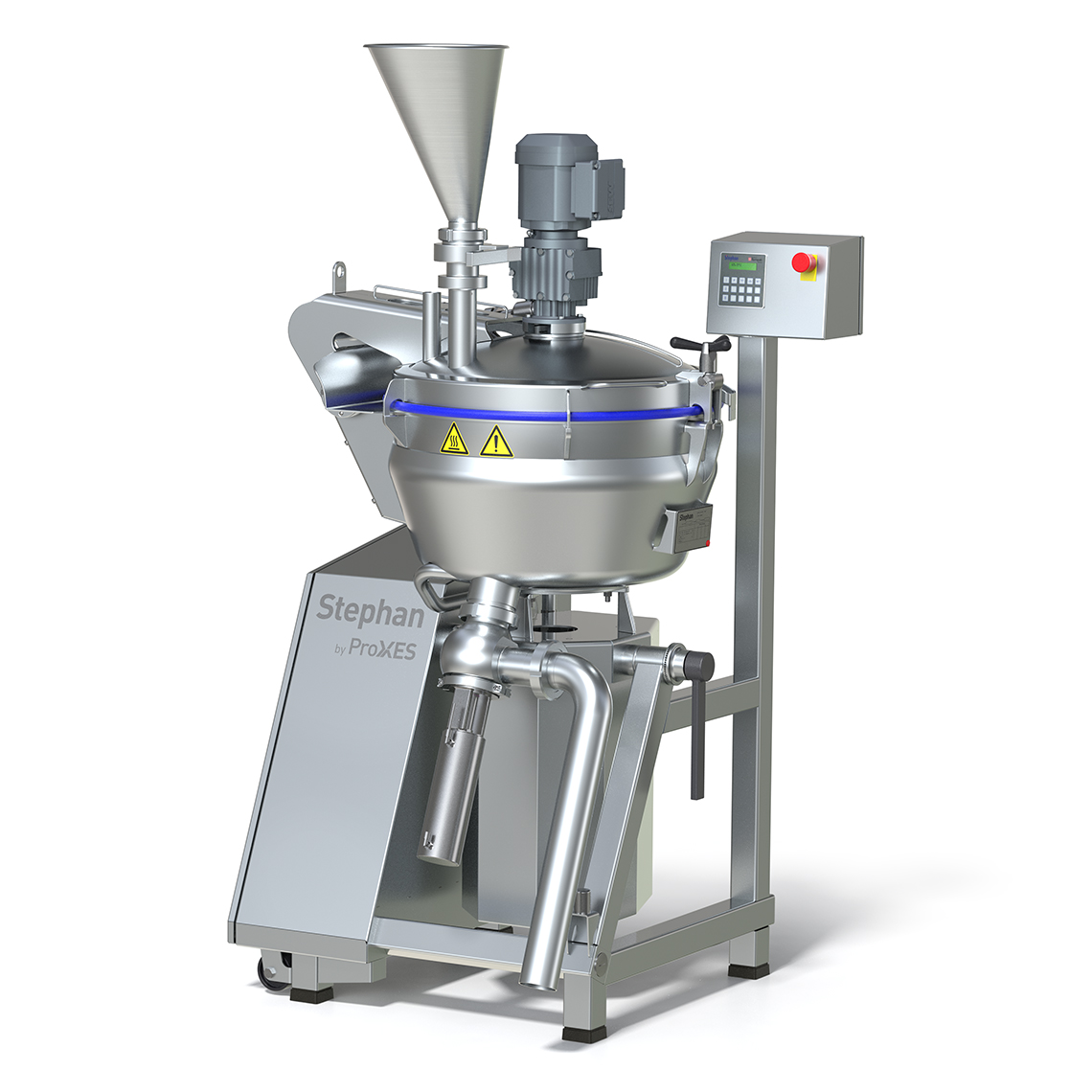
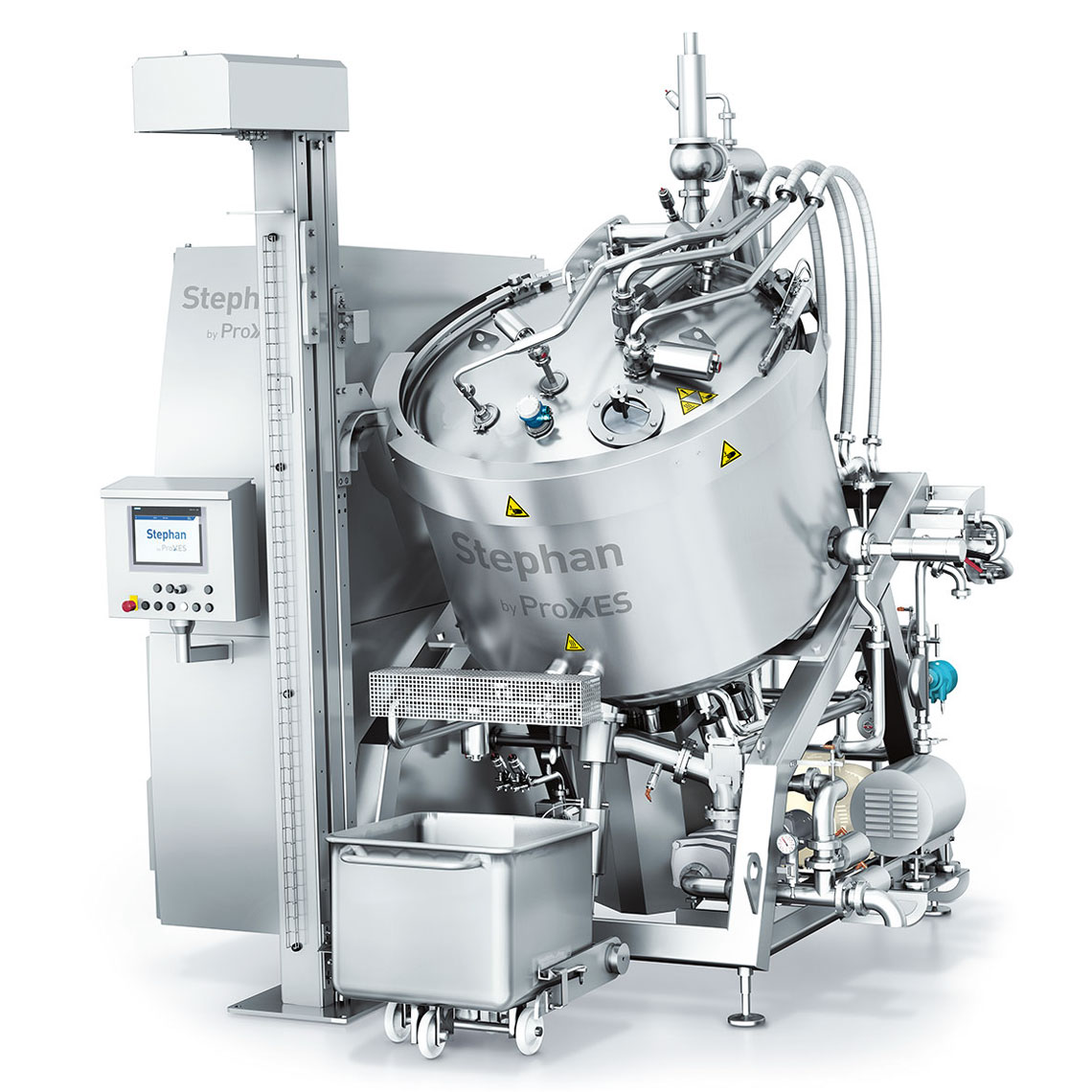
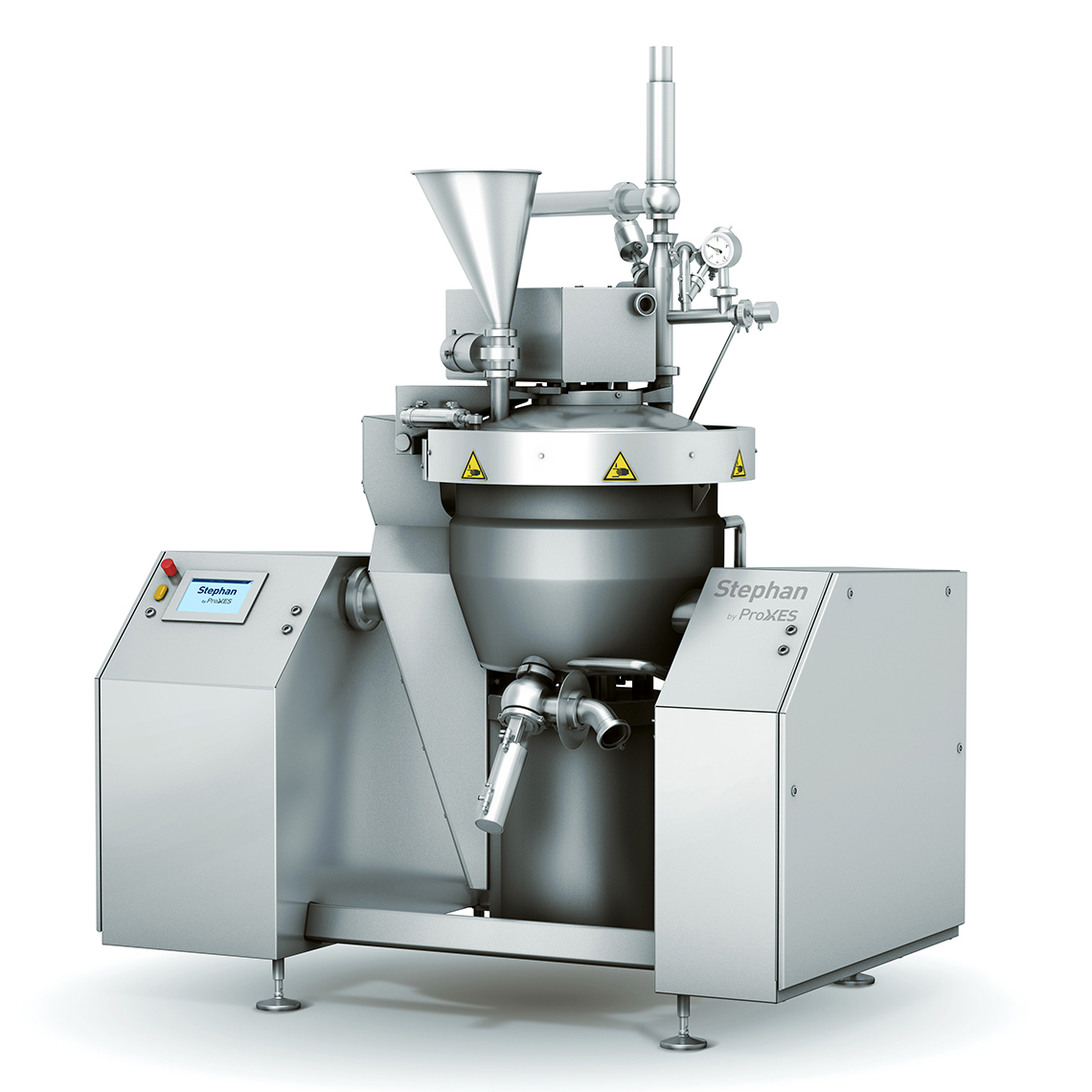
ProXES supplies a complete range of specialized machines covering every step of plant-based beverage production: from multi-zone pre-grinding (Disc Mill MD) and fine wet milling (Toothed Colloid Mill MZ, Corundum Stone Mill MK, Co-Ball Mill) to thermal processing (Terlotherm), vacuum deaeration, fine emulsifying (MicroCut), and flexible batch production (Stephan Universal Machines, CombITherm).
Key Process Steps in Plant-Based Drink Production
Industrial production of plant-based beverages follows a defined sequence of processing steps. ProXES machines are engineered to support each stage with precision and repeatability:
- Soaking & pre-treatment: Raw materials such as oats, nuts, or soybeans are soaked to improve grinding efficiency and nutrient extraction.
- Multi-zone pre-grinding: The Disc Mill MD ensures uniform particle distribution and supports higher yields after separation.
- Fine wet grinding: The Toothed Colloid Mill MZ or Corundum Stone Mill MK achieves the target particle size for texture, mouthfeel, and stability.
- Ultra-fine grinding: The Co-Ball Mill enables very fine grinding for specialty beverages with demanding particle-size requirements.
- Fine cutting & emulsifying: MicroCut systems create smooth, homogeneous beverage bases.
- Separation & extraction: Sieves or centrifuges remove solid residues such as oat pulp or okara from the liquid extract.
- Thermal processing & pasteurization: The Terlotherm provides fast, continuous heat treatment with precise temperature control.
- Deaeration: The Vacuum Deaerator removes air bubbles to improve stability, shelf life, and sensory quality.
- Batch processing & blending: Stephan Universal Machines and the CombITherm support flexible mixing, emulsifying, and ingredient dosing.
- CIP: Automated Cleaning-in-Place ensures hygienic production and food safety compliance.
Key Challenges in Plant-Based Beverage Production
Plant-based beverage manufacturing presents unique technical challenges that require specialized process equipment and deep formulation expertise:
- Particle size control: The Disc Mill MD and Toothed Colloid Mill MZ deliver precise, repeatable particle size distribution for smooth texture and mouthfeel.
- Plant protein stability: Homogeneous protein distribution helps prevent sedimentation, phase separation, or aggregation during shelf life.
- Starch gelatinization: For oat-based beverages, the Terlotherm ensures precise thermal control to manage viscosity, sweetness, and texture.
- Air entrapment & deaeration: The ProXES Vacuum Deaerator removes air bubbles inline to improve stability, shelf life, and sensory quality.
- Scalability: ProXES equipment scales from small premium nut milk batches to high-volume oat milk production while maintaining consistent quality.
- Hygienic design & food safety: EHEDG-oriented hygienic design and full CIP capability support safe, efficient production.
- Allergen management: Integrated CIP protocols help prevent cross-contamination when processing different plant protein sources.

Zapoznaj się z naszą nową broszurą, aby dowiedzieć się więcej.
CHCESZ WIEDZIEĆ WIĘCEJ? SKONTAKTUJ SIĘ Z NASZYMI EKSPERTAMI.
FAQ – Plant-Based Drink Production Equipment
Below you find answers to common questions.
-
What machines are used for industrial oat milk production?
Industrial oat milk production uses the FrymaKoruma Disc Mill MD for multi-zone pre-grinding, the Toothed Colloid Mill MZ for fine wet milling (up to 40,000 kg/h inline), the Vacuum Deaerator for continuous air removal, and the Terlotherm for continuous heat treatment. For batch production, the Stephan Universal Machine 74 or 200 and the CombITherm provide flexible processing.
-
How is plant-based milk made industrially?
Industrial plant-based milk production starts with soaking raw materials (oats, nuts, soybeans), followed by multi-zone pre-grinding (Disc Mill MD), fine wet milling (Toothed Colloid Mill MZ or Corundum Stone Mill MK), optional ultra-fine grinding (Co-Ball Mill), fine emulsifying (MicroCut), thermal processing (Terlotherm), vacuum deaeration (Vacuum Deaerator), and final batch blending (Universal Machine, CombITherm). ProXES covers every step.
-
What is a colloid mill and why is it important for vegan beverages?
A colloid mill is a high-shear wet grinding machine that reduces particle size in liquid suspensions. In plant-based beverage production, the colloid mill breaks down plant cell structures to release proteins and fats, achieve smooth texture, and ensure stable dispersion. ProXES offers the Toothed Colloid Mill MZ (up to 40,000 kg/h) for high-volume production and the Corundum Stone Mill MK for premium nut milks.
-
Can ProXES machines handle both high-volume and small-batch production?
Yes. ProXES offers a complete range from small-batch to full industrial scale. The Stephan Universal Machine 74 and 200 are ideal for small and medium batches. The CombITherm provides flexible multifunctional batch processing. For high-volume continuous production, the Disc Mill MD combined with the Toothed Colloid Mill MZ handles throughputs up to 40,000 kg/h.
-
Are ProXES beverage machines CIP-capable and food-safe?
Yes. All ProXES beverage processing equipment – FrymaKoruma, Stephan, and Terlet machines – is designed with hygienic principles meeting EHEDG guidelines. Full CIP (Cleaning-in-Place) capability ensures rapid, validated cleaning between production runs – critical for allergen management and food safety compliance.
-
Which plant proteins can ProXES machines process?
ProXES machines are proven for oats, soybeans, almonds, cashews, walnuts, peanuts, sesame seeds, hemp seeds, peas, rice, and more. The Disc Mill MD and Toothed Colloid Mill MZ combination allows one production line to process multiple raw material types. The Corundum Stone Mill MK specializes in premium nut milks requiring ultra-fine fineness.