

Baby Food Processing Equipment for Purees, Soups and Ready Meals
ProXES supplies industrial baby food processing equipment for manufacturers of pureed foods, soups, ready meals and fruit preparations for infants and young children. The portfolio ranges from universal machines and batch cookers to wet mills, Microcut fine cutting systems, vacuum deaerators and the Stephan SAM aseptic processing unit. Capacities reach from laboratory scale for product development up to 4,800 l/h per cooking unit for low-viscosity products. The machines are built for gentle heating, processing under vacuum and automated cleaning, which helps producers run plants certified to FSSC 22000 or IFS Food. ProXES delivers batch, semi-continuous and continuous solutions, tailored to recipe, texture and output.
What Is Industrial Baby Food Processing?
Baby food is any soft, easily consumed food other than breast milk or infant formula that is made specifically for babies between about four months and two years of age. Industrial baby food processing turns raw fruit, vegetables, cereals, meat, fish and dairy ingredients into products with a defined texture, a stable composition and a high level of microbiological safety. Typical products are smooth first-stage purees, purees with small pieces for older infants, soups, complete meals, fruit preparations and desserts, packed in jars, pouches, cans or trays.
The core operations are size reduction, mixing, cooking, deaeration, thermal preservation and filling. ProXES focuses on this segment, known as prepared baby food. Infant formula is a different product category: it is a breast milk substitute that is usually produced as a powder by spray drying and therefore requires a separate production technology.
How Baby Food Is Made: Key Process Steps
Industrial baby food production follows a defined sequence. Each step influences safety, texture, nutrient retention and shelf life:
- Raw material intake and preparation: Fruit, vegetables, cereals and meat are inspected, washed, peeled and pre-cut. Incoming goods testing is critical, because EU law limits pesticide residues in baby food to 0.01 mg/kg per active substance.
- Size reduction and fine cutting: Microcut fine cutting systems, the Tooth Colloid Mill or the Corundum Stone Mill reduce the ingredients to the target particle size. The texture is adjusted to the age group, from completely smooth purees for first foods to soft pieces for older infants.
- Mixing and recipe dosing: Ingredients, water, vegetable oils and starches are dosed into a universal machine, the Vacutherm or the Combitherm and mixed into a homogeneous mass. Automatic recipe management, as available on the Combitherm, keeps every batch reproducible.
- Cooking and heat treatment: The product is heated by direct steam injection or indirectly via a double jacket. Universal Machines heat up to 125 °C, and scrapers on the agitator prevent burn-on and keep heat transfer even.
- Vacuum processing and deaeration: Processing under vacuum and continuous vacuum deaeration remove entrapped air before heating and filling. Less oxygen means less oxidation, which protects colour, flavour and oxygen-sensitive vitamins such as vitamin C.
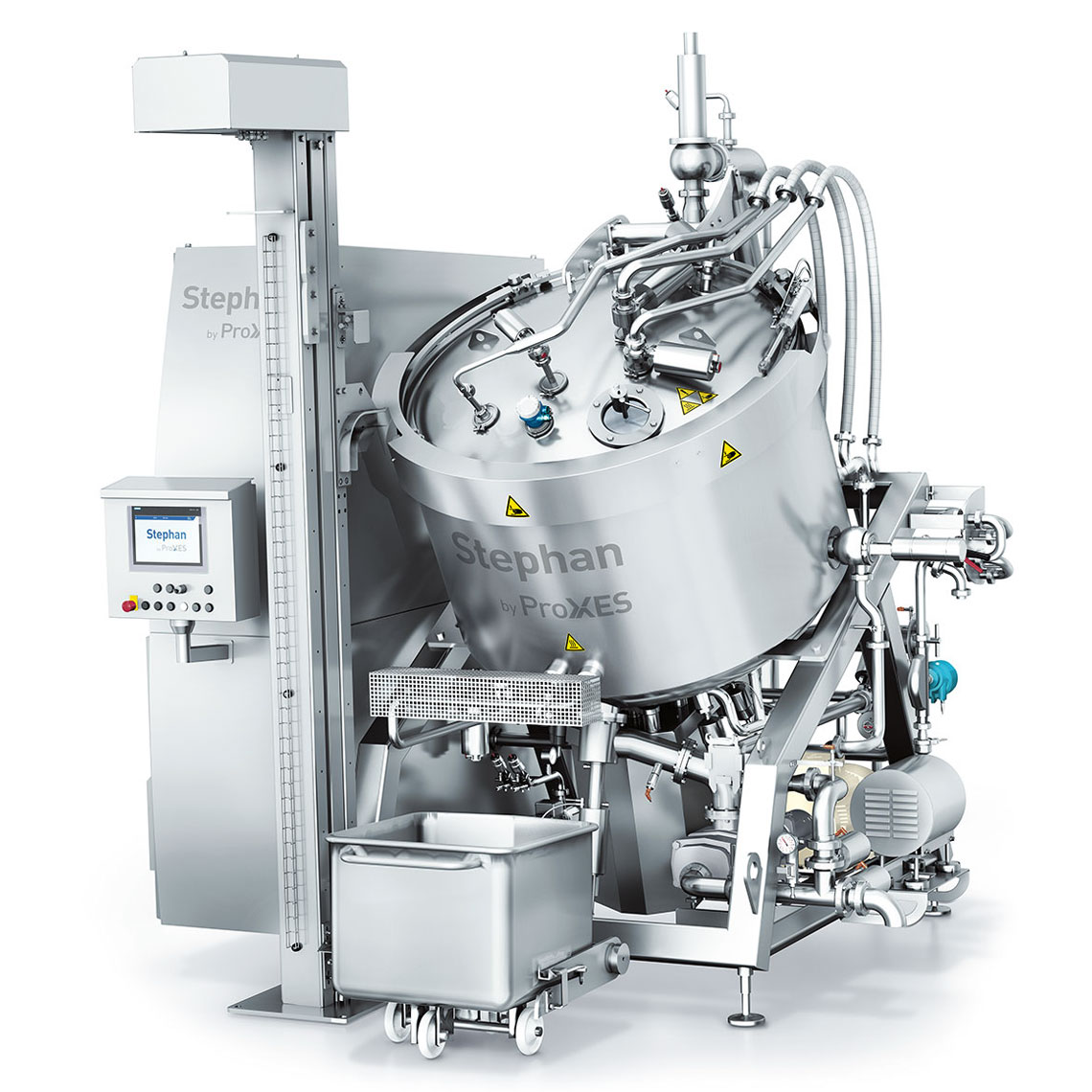
- Preservation by pasteurization, sterilization or aseptic processing: Depending on the packaging and the required shelf life, the product is pasteurized, sterilized or processed aseptically. The Stephan SAM combines direct heat processing with cleaning in place (CIP) and sterilization in place (SIP) for shelf-stable baby food.
- Cooling, filling and cleaning: After indirect cooling the product is transferred to the filling line for jars, pouches or cans. Automated CIP cycles clean the equipment between batches and product changeovers and document the cleaning parameters.
Key Challenges in Baby Food Production
Baby food production is one of the most demanding applications in food processing. Common technical and regulatory challenges include:
- Microbiological safety for a highly vulnerable consumer group, with no tolerance for contamination
- Strict contaminant limits, including 0.01 mg/kg per pesticide under Directive 2006/125/EC and maximum levels for lead, cadmium and other contaminants under Regulation (EU) 2023/915
- Allergen management and prevention of cross-contact on lines that produce many recipes
- Retention of heat-sensitive vitamins, natural colour and fresh taste despite intensive heat treatment
- Age-appropriate texture, from smooth first-stage purees to products with defined pieces
- Consistent batch-to-batch quality and complete documentation of process parameters for audits and traceability
- Short changeover times and validated cleaning with many small batches and frequent recipe changes
- Reliable scale-up of new recipes from product development to industrial production
- Lower consumption of water, energy and cleaning agents to reduce costs and the CO2 footprint
Hygiene and Certification Standards in Baby Food Production
Retailers and brand owners expect baby food manufacturers to hold a food safety certification recognised by the Global Food Safety Initiative (GFSI). The two most widespread schemes in Europe are FSSC 22000 and IFS Food. FSSC 22000 combines the ISO 22000 food safety management system with prerequisite programmes for food manufacturing according to ISO/TS 22002-1 and additional scheme requirements. IFS Food is a product- and process-oriented standard developed by German, French and Italian retail associations and is often a condition for supplying private label products.
Both schemes certify the production site and its management system, not individual machines. Processing equipment still plays a central role in passing audits. Hygienic design with surfaces that are easy to clean and inspect, closed processing under vacuum, automated CIP and SIP, as well as controlled and recorded temperatures, holding times and vacuum levels make it easier to control the critical control points of the HACCP plan, to validate cleaning and to provide the documentation that auditors request.
ProXES equipment supports these requirements in several ways. The Stephan SAM is designed for aseptic processing with CIP and SIP, the Combitherm offers automated cleaning (CIP) and the ProUI user interface, and ProCIP cleaning systems prepare, distribute and monitor cleaning solutions with reporting. In addition, baby food in the EU must meet the composition and contaminant rules of Commission Directive 2006/125/EC on processed cereal-based foods and baby foods for infants and young children.
Capacities and Process Parameters
The table shows the capacities and main process parameters of the ProXES machines used in baby food production. Values refer to low-viscosity products and standard recipes; the actual output depends on recipe, viscosity, particle size and system configuration.
| Machine | Capacity | Process parameters and functions | Role in baby food production |
|---|---|---|---|
| Vacutherm | up to 4,800 l/h* | Direct and indirect heating, indirect cooling, vacuum processing, mixing, emulsifying, dispersing | Cooking and mixing of purees, soups and sauces |
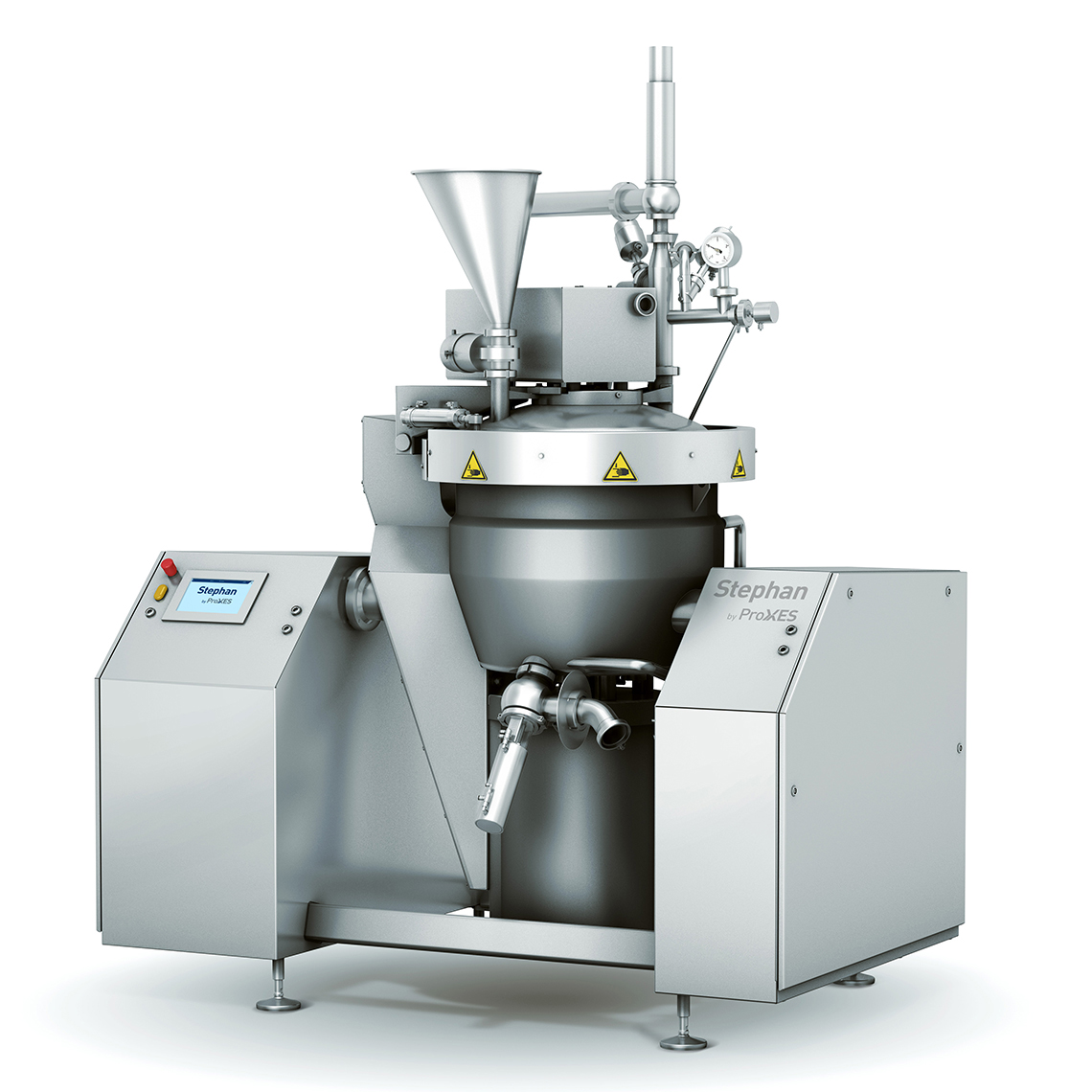
| Combitherm | up to 4,800 l/h* | Direct steam injection, double jacket, inclined vessel with scrapers, vacuum degassing, automated CIP, optional Microcut | Large batches of fruit and vegetable purees |
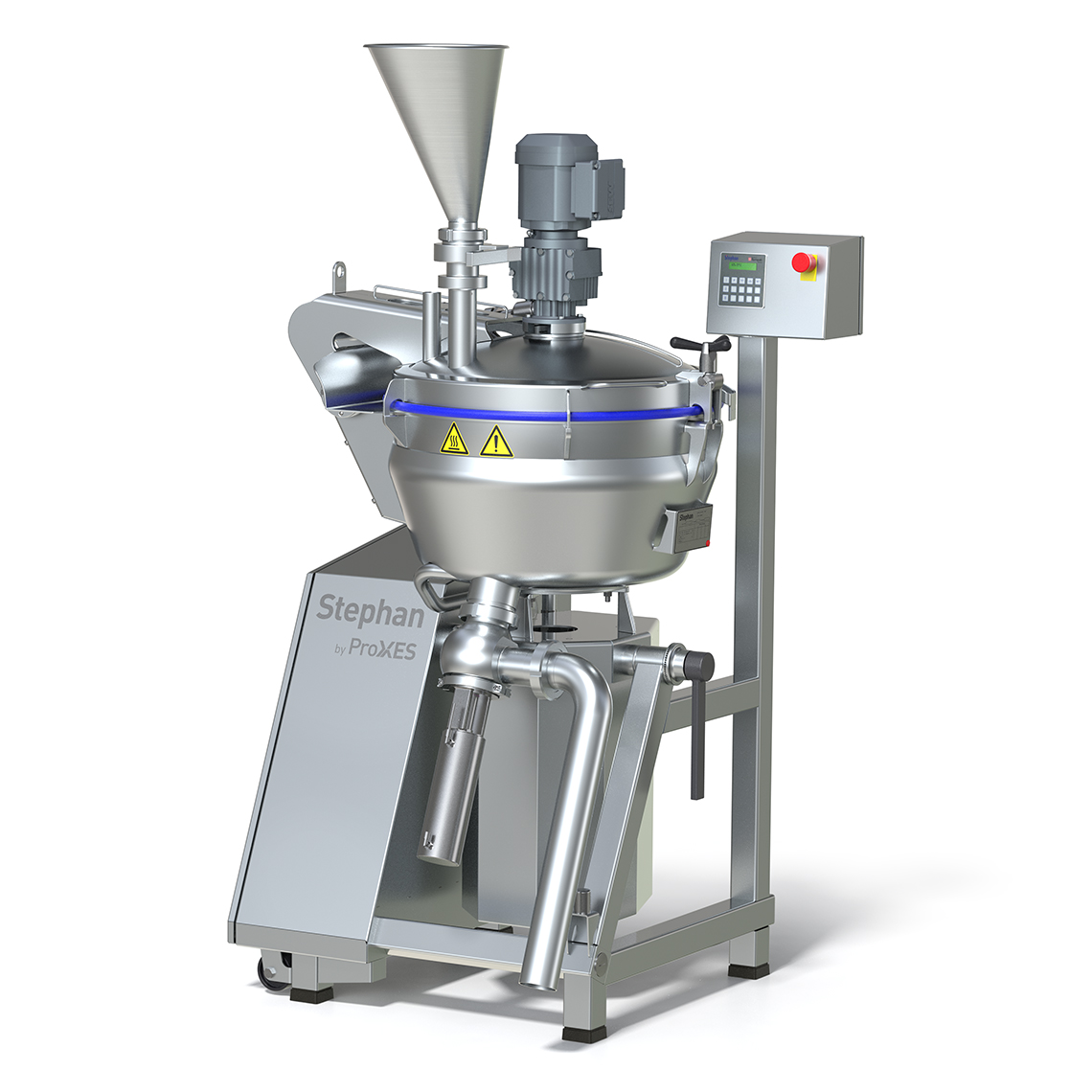
| Universal Machine 74 / UM 200 | up to 1,000 l/h* | Direct and indirect heating up to 125 °C, vacuum processing, mixing, cutting, emulsifying, indirect cooling via double jacket | Small and medium batches of purees and ready meals |
| Universal Machine UMX 5 | Laboratory scale | Mixing, cutting and heating for recipe trials | Product development and scale-up |
| SAM (Stephan) | up to 1,600 l/h* | Direct heat processing, indirect or condensing cooling, CIP, SIP | Aseptic baby and senior food, purees, soups with particles |
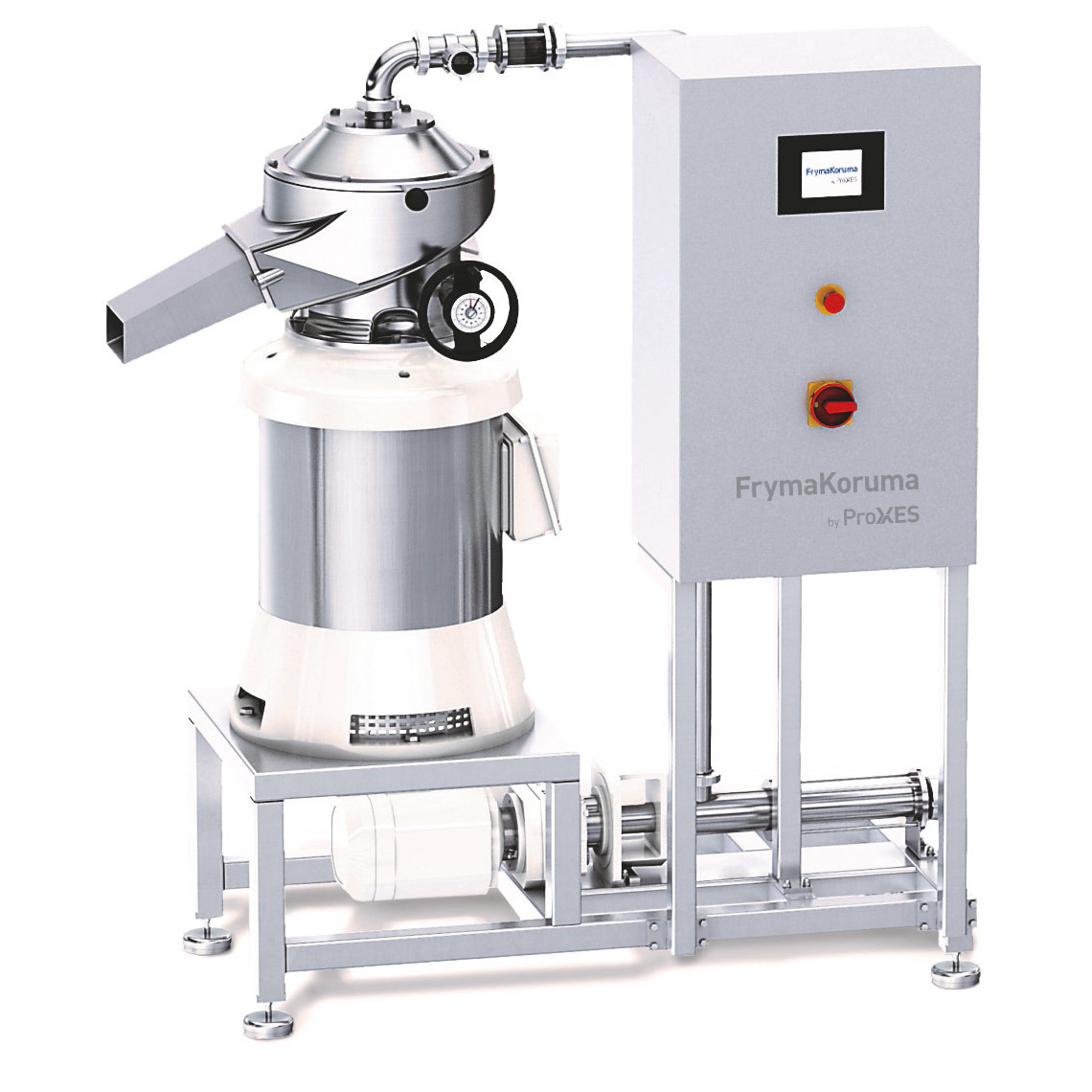
| Corundum Stone Mill | up to 5,000 kg/h inline, up to 3,000 kg/h stand-alone | Wet fine grinding, dispersing | Very smooth purees, nut and seed pastes |
| Tooth Colloid Mill | up to 40,000 kg/h inline, up to 5,000 kg/h stand-alone | Wet fine grinding, dispersing, emulsifying, adjustable gap | Rice, oat and soy slurries, fine purees |
| Vacuum Deaerator | up to 30,000 kg/h* | Continuous vacuum deaeration | Removal of air before heating and filling |
| Microcut 15 / Microcut HD150 | up to 6,000 kg/h (Microcut Classic and Inline) | Non-contact rotor-stator system, fine cutting, emulsifying, homogenizing | Fine cutting of fruit, vegetables and meat |
* Application: low-viscosity products. Capacities are based on standard recipes and depend on system configuration.
Baby Food Processing Machines from ProXES
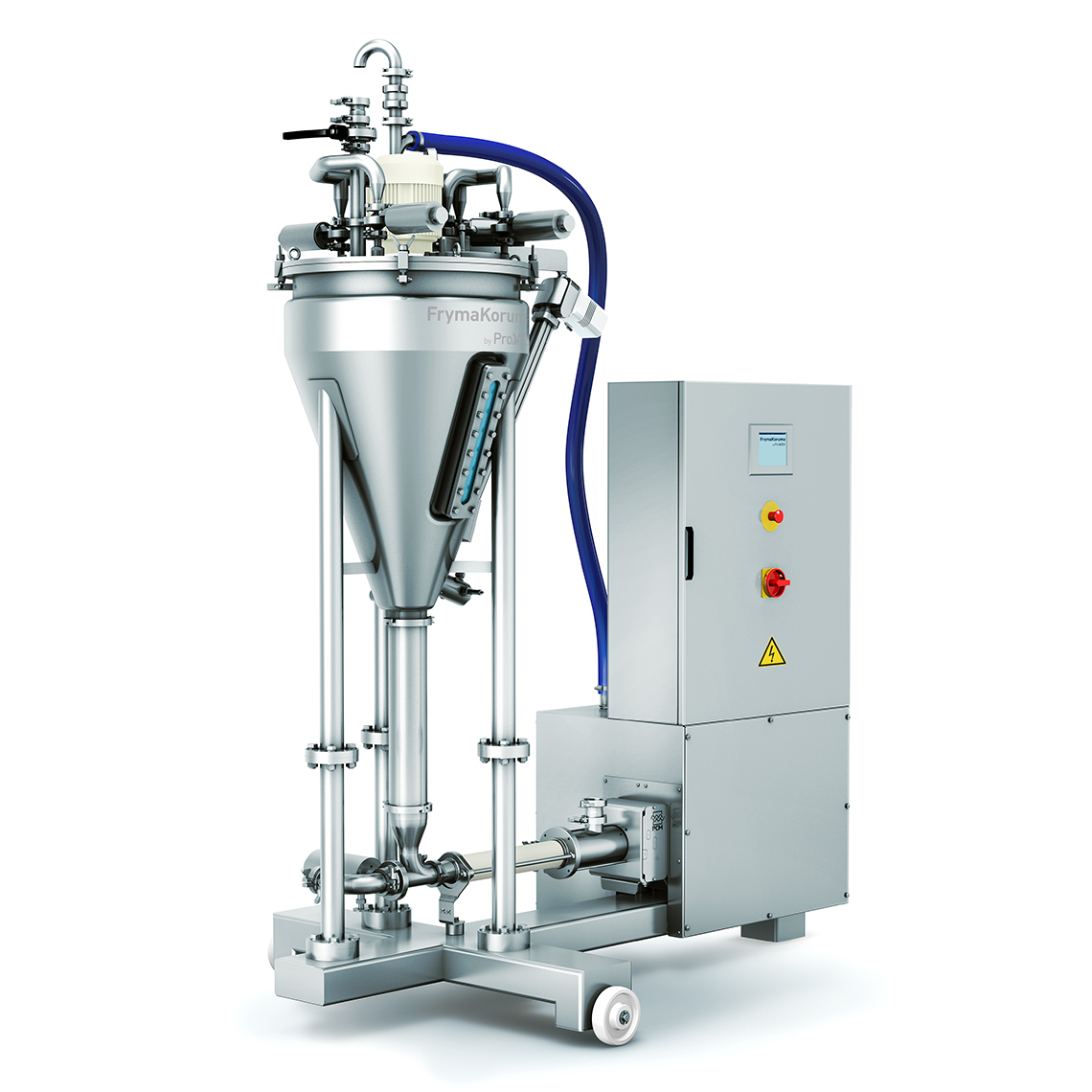
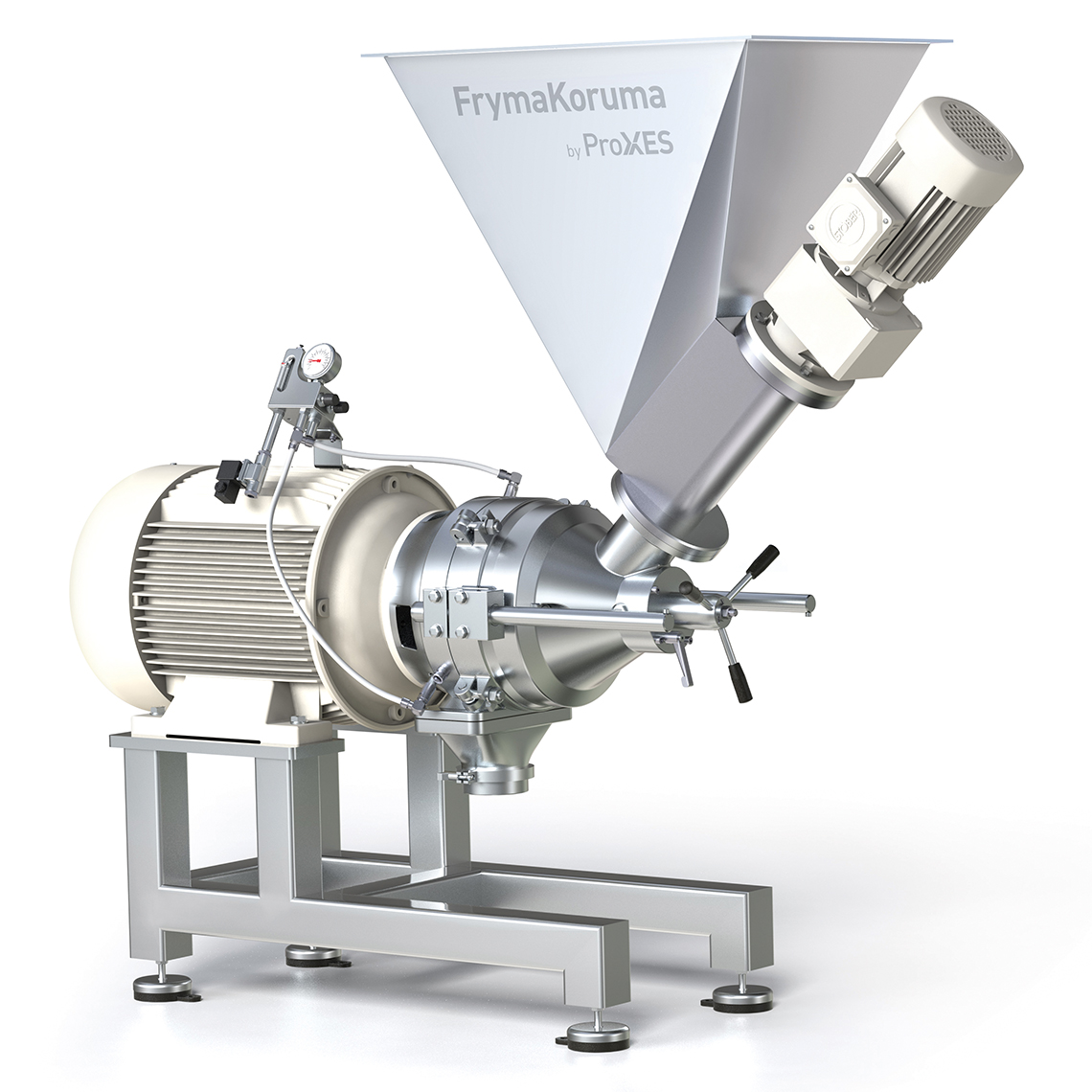
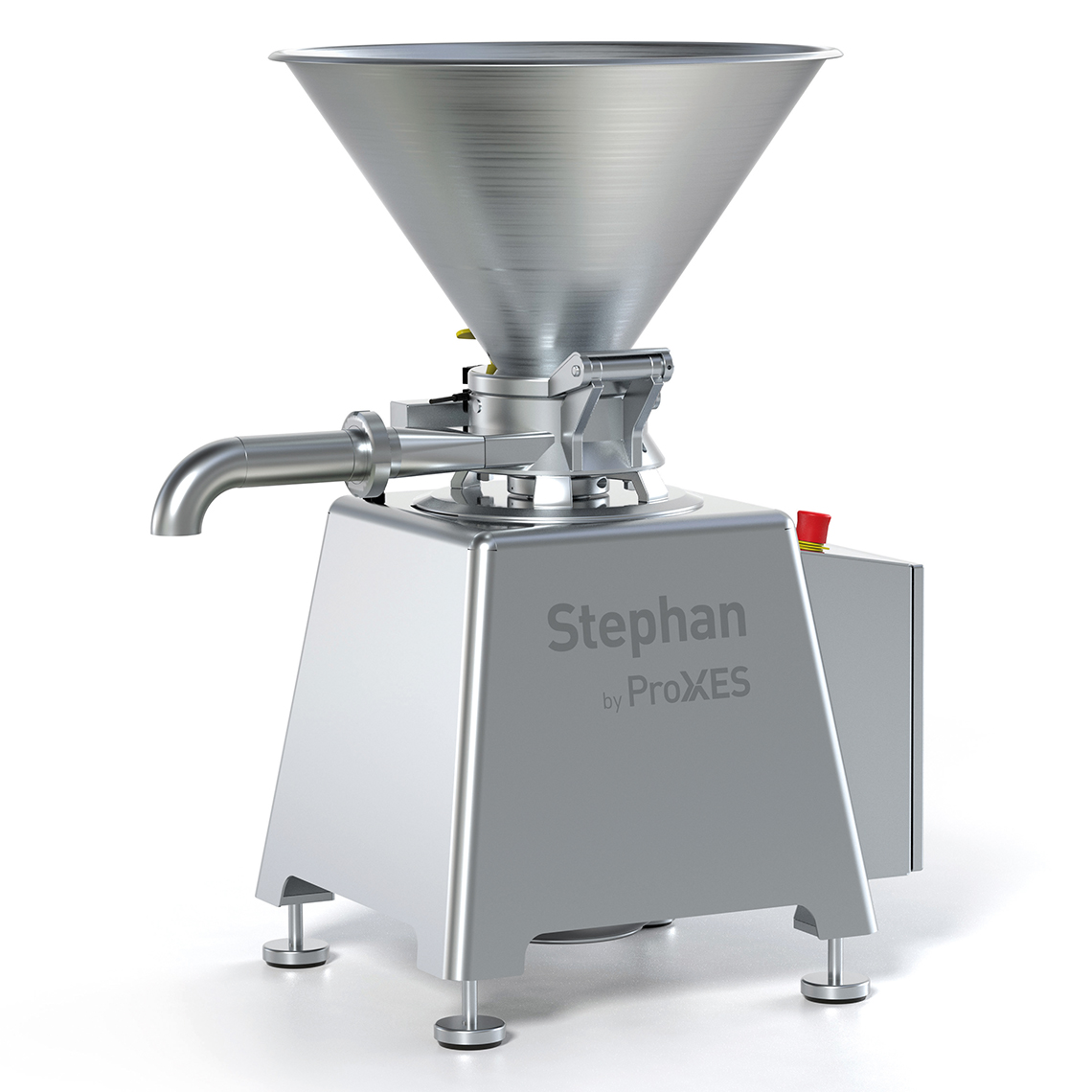
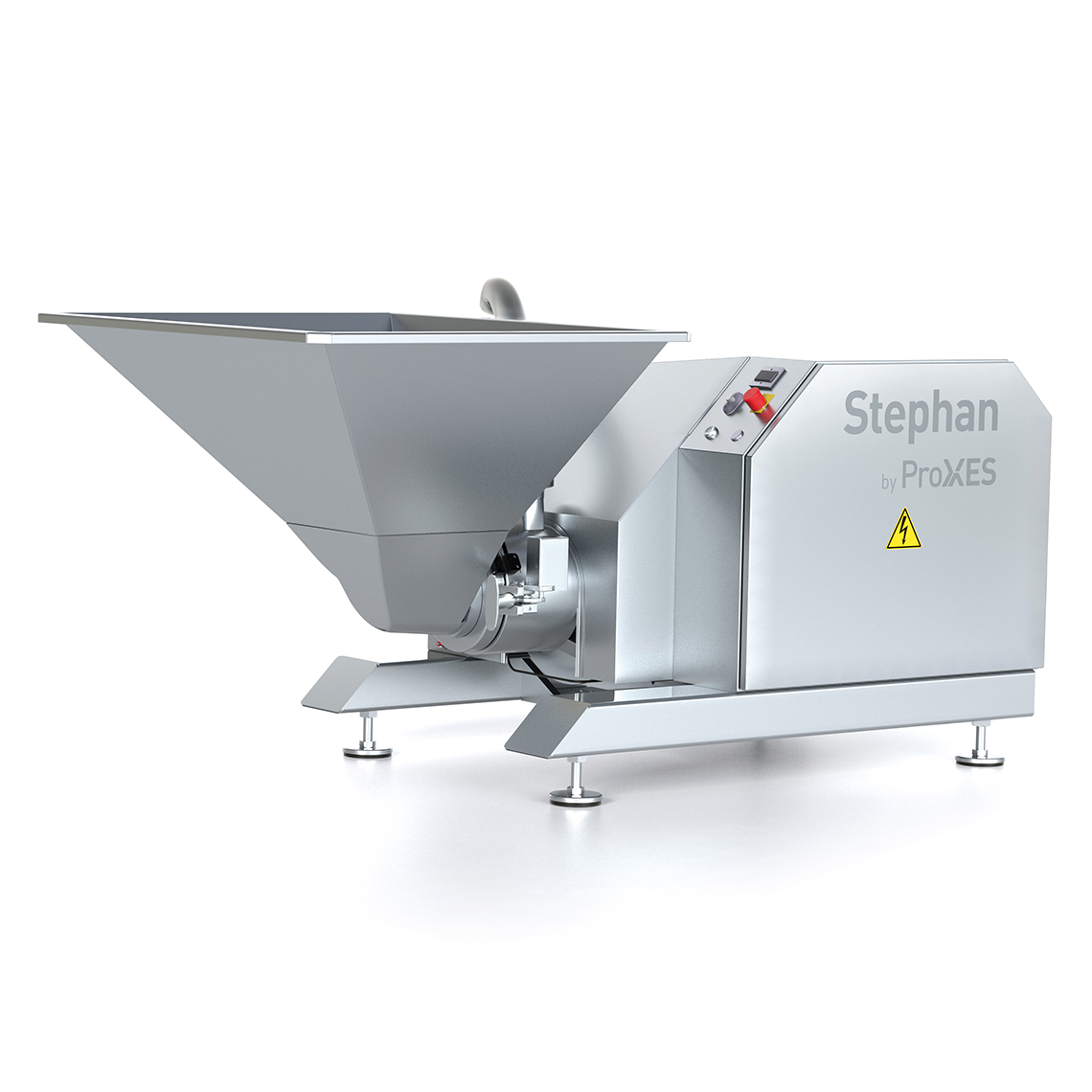
The following machines from the ProXES brands Stephan and FrymaKoruma cover every step of baby food production, from development to industrial output.



FAQ: Baby Food Processing Equipment
Below you find answers to common questions about baby food processing equipment.
-
What equipment is needed for industrial baby food production?
Industrial baby food production requires machines for size reduction, mixing, cooking, deaeration and preservation. Typical equipment includes fine cutting systems such as the Microcut, wet mills, universal machines or batch cookers such as the Vacutherm and Combitherm, vacuum deaerators and an aseptic processing unit such as the Stephan SAM, complemented by CIP systems for automated cleaning.
-
How is baby food made industrially?
Raw fruit, vegetables, cereals or meat are washed and pre-cut, reduced to the target particle size and mixed according to the recipe. The mass is then cooked, deaerated under vacuum and preserved by pasteurization, sterilization or aseptic processing before it is cooled and filled into jars, pouches or cans.
-
What is the difference between baby food and infant formula production?
Baby food is a soft complementary food such as a puree, soup or ready meal for babies from about four months. Infant formula is a breast milk substitute that is usually produced as a powder by spray drying. ProXES equipment is designed for prepared baby food such as purees, soups and meals.
-
Which certifications do baby food manufacturers need?
Most retailers require a GFSI-recognised food safety certification, in Europe usually FSSC 22000 or IFS Food. These schemes certify the production site, and hygienic equipment with CIP, SIP and documented process parameters helps manufacturers meet their requirements.
-
What capacities do ProXES baby food machines offer?
Capacities range from laboratory scale with the UMX 5 to up to 4,800 l/h per batch cooking system such as the Vacutherm or Combitherm. Continuous units reach higher outputs, for example up to 30,000 kg/h with the Vacuum Deaerator, all values for low-viscosity products.