

Ketchup Production Lines & Processing Equipment for Industrial Sauces
A ketchup production line is an industrial system that produces tomato-based sauces by combining dosing, mixing, cooking, homogenizing, deaeration and hot filling into one continuous or batch process.
ProXES is a European manufacturer of industrial ketchup production equipment, combining the process technology brands FrymaKoruma, Stephan and Terlet under one roof. Our ketchup processing lines cover the full chain from ingredient dosing to hot fill and scale from compact Universal Machine batch units to continuous Terlotherm lines.
A ketchup production line must handle different recipes, viscosities and particulate levels without long changeover times. ProXES equipment supports fast CIP cleaning between ketchup, BBQ, chili and specialty sauces, with hygienic design according to EHEDG guidelines.
Hot production is the standard for starch-based ketchup, mustard, BBQ and chili sauces. The cooking step gelatinises the starch, builds viscosity and ensures a shelf life of 12 to 24 months at ambient storage. Cold production is used for emulsified table sauces, dressings and dips – similar to low-fat mayonnaise, where starches or hydrocolloids are incorporated without heat.
How Industrial Ketchup Production Works: 7 Process Steps
Industrial ketchup production consists of seven standardized steps, each using dedicated processing equipment to ensure consistent quality and shelf life.
- Ingredient Dosing: Tomato paste, water, sugar, salt, starch, vinegar and spices are dosed gravimetrically or volumetrically. Precise dosing is the basis for consistent Brix, viscosity and flavor across batches.
- Mixing & Pre-Hydration: Dry and liquid ingredients are pre-mixed in a vacuum mixer to avoid lumps and air inclusion. Pre-hydration of starch is critical for clean gelatinisation in the cooking step.
- Cooking / Heat Treatment: The product is heated to 85–95 °C to gelatinise the starch and pasteurise the sauce. Direct steam injection (e.g. Combitherm) or scraped-surface heat exchangers (Terlotherm) are standard ProXES approaches.
- Fine Cutting & Emulsifying: A colloid mill or Microcut machine reduces particle size to produce the smooth, glossy texture consumers expect. This step defines the final mouthfeel of the ketchup.
- Homogenizing: A homogenizer such as the FrymaKoruma ProxxD stabilises the emulsion and finalises particle size distribution. Consistent homogenization prevents phase separation during storage.
- Deaeration: Inline vacuum deaeration removes trapped air to prevent oxidation, colour darkening and foam in the final package. This step is critical for oxygen-sensitive recipes and is often underestimated.
- Hot Fill: Ketchup is filled at a minimum of 88 °C to sterilise both product and container. Hot fill secures microbial safety and enables 12 to 24 months of ambient shelf life without preservatives.





What machines are used in a ketchup production line?
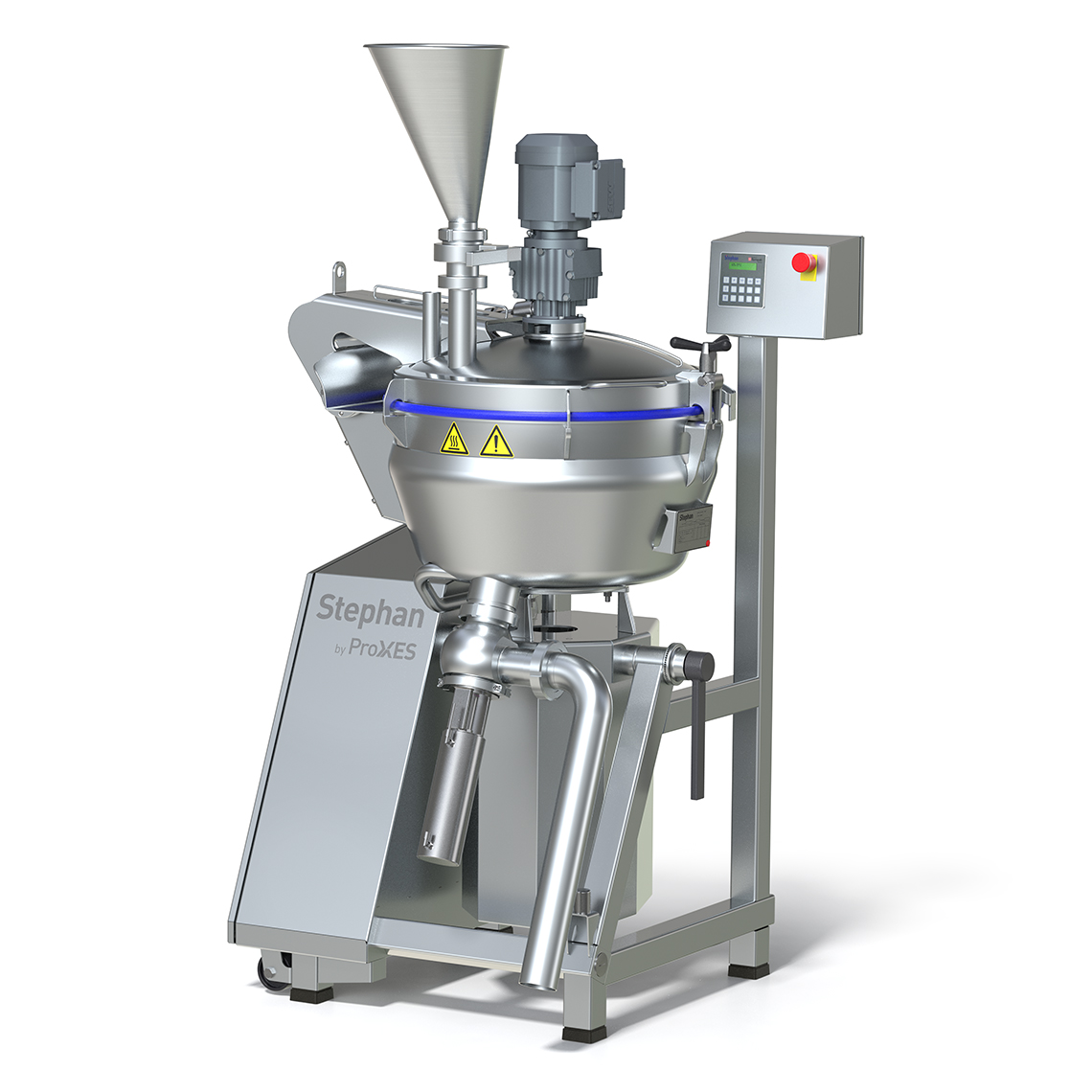
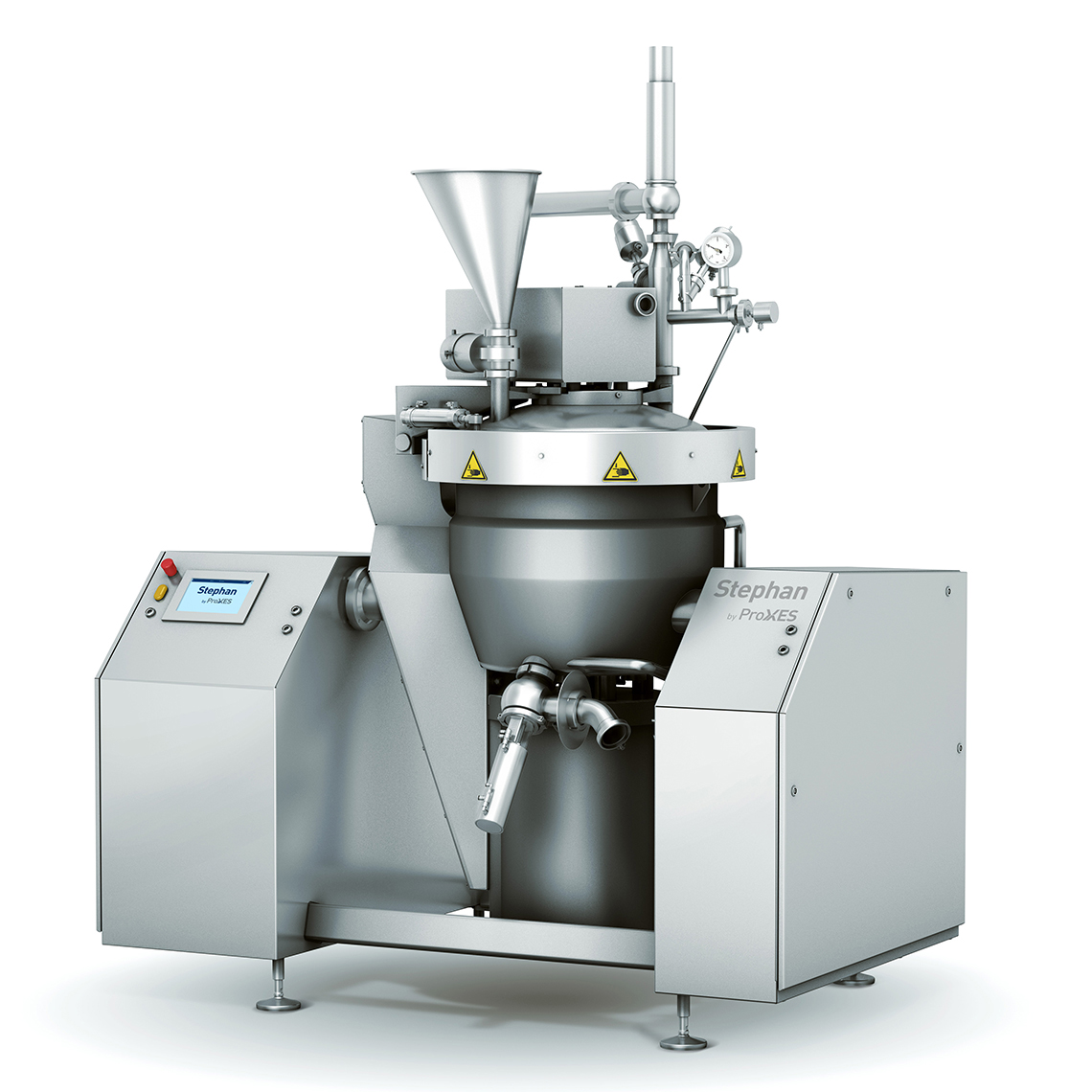
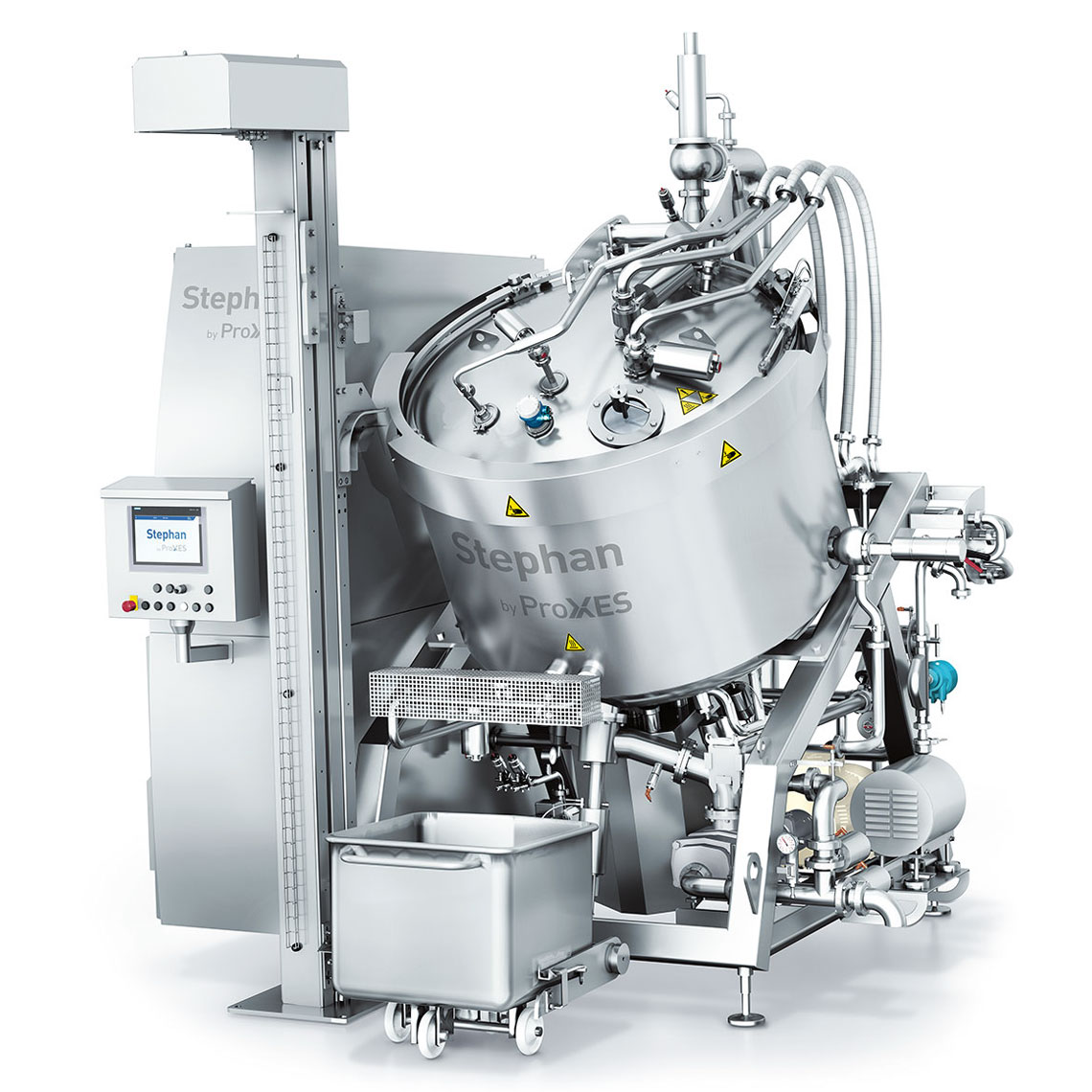
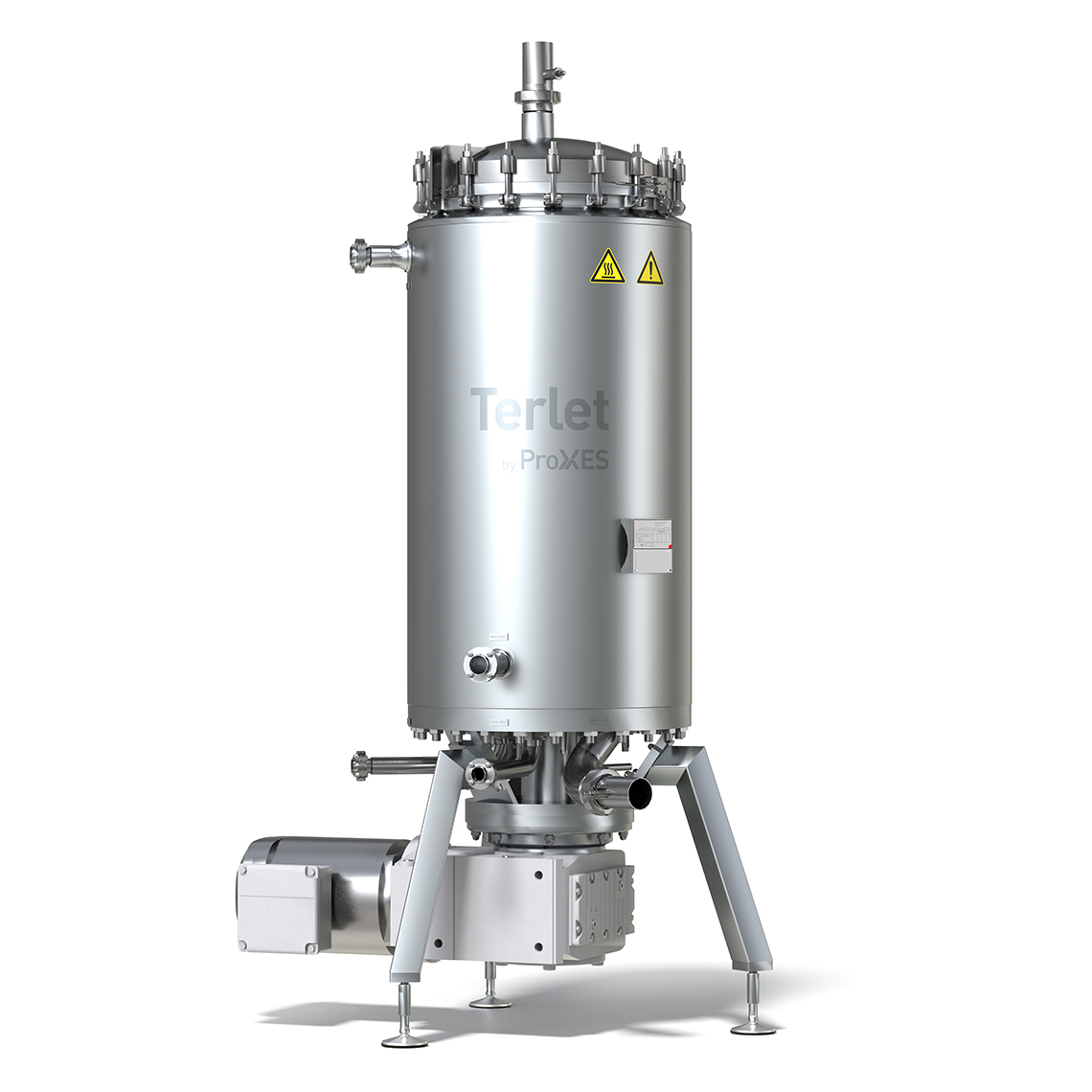
ProXES offers a complete portfolio of machine families for ketchup and table sauce production – covering cooking, emulsifying, homogenizing, deaeration, cooling, CIP and full continuous preparation lines. The following table shows the key machines used in industrial ketchup production lines and their role in the line.
| Machine | Brand | Role in Ketchup Line |
|---|---|---|
| Universal Machine 74 | Stephan | Small-batch cooking & mixing |
| Universal Machine 200 | Stephan | Medium-batch cooking & mixing |
| Combitherm | Stephan | Large-scale batch cooker (direct steam) |
| Continuous Cooker | Stephan | Inline high-shear continuous cooking |
| Vacutherm | Stephan | Vacuum processing, oxidation-free |
| ProxxD | FrymaKoruma | Homogenizing |
| DIL (Dinex Inline) | FrymaKoruma | Inline high-shear emulsifying |
| POW-DIL | FrymaKoruma | Powder dispersion of starch & thickeners |
| Terlotherm | Terlet | Continuous pasteurization & heating |
| Culiflex | Terlet | Continuous turnkey preparation line |
| Terlocool | Terlet | Rapid cooling after hot processing |
Versatile Machines for Ketchup & Table Sauce Production
ProXES processing systems produce ketchup, BBQ, chili, mustard, dressings, dips and mayonnaise on the same hygienic equipment platform. Modular line extensions adapt capacity, recipe flexibility and cooling performance to specific production targets. Talk to our process experts to configure a batch or continuous ketchup line for your requirements.
Batch vs Continuous Ketchup Production: Direct Comparison
Continuous ketchup production is more efficient for large-scale manufacturing, while batch processing offers higher flexibility for recipe changes and specialty sauces.
| Criterion | Batch Production | Continuous Production |
|---|---|---|
| Operating principle | Fixed batch volume, processed as one unit | Ingredients flow continuously through the line |
| Recipe flexibility | High – suitable for frequent recipe changes | Lower – optimised for long runs of the same recipe |
| Changeover time | Short – faster between small batches | Longer – flushing and CIP between runs |
| Ideal for | Specialty sauces, product development, smaller SKUs | High-volume single-SKU production |
| ProXES machines | Universal Machine 74/200, Combitherm, Vacutherm, ProxxD | Terlotherm, Continuous Cooker, Culiflex (as modular extension) |
FAQ: Ketchup & Table Sauce Production
Below you find answers to common questions about industrial ketchup and table sauce production.
-
What equipment is needed for a ketchup production line?
A ketchup production line needs a dosing system, a mixer, a cooker or heat exchanger, a fine-cutter, a homogenizer, a deaerator and a hot filler. ProXES supplies all process steps before filling through the machine families Terlotherm, Combitherm, Vacutherm, Microcut, Cook-It and Universal Machines.
-
How is ketchup produced industrially?
Industrial ketchup production follows seven steps: ingredient dosing, mixing, cooking at 85–95 °C, fine cutting, homogenizing, deaeration and hot fill at ≥ 88 °C. The process gelatinises the starch, stabilises the emulsion and secures a shelf life of 12 to 24 months at ambient storage.
-
What capacity does a ProXES ketchup line achieve?
ProXES ketchup lines scale from compact Universal Machine batch units for small volumes and product development to high-capacity continuous lines with Terlotherm for industrial mass production. The achievable capacity depends on recipe, viscosity and line configuration – our process experts size each line to your production targets.
-
What is the difference between batch and continuous ketchup production?
Batch production is flexible for smaller volumes and frequent recipe changes. Continuous production delivers higher throughput and lower cost per ton but needs longer changeover times between recipes.
-
Can the same line produce ketchup, BBQ and chili sauces?
Yes – a properly configured ProXES line can produce ketchup, BBQ, chili, mustard and specialty sauces on the same equipment. Hygienic design and integrated CIP cleaning enable fast, audit-proof changeovers between recipes.